Turning 30 in Turkmenistan
border crossing
Turkmenistan brought me my second experience walking across a border and it was definitely more tiring than the first. I also got a good laugh in though—apparently as we exited Uzbekistan, the border agent was staring at my ass and followed me a couple steps to the point of completely missing the passport check of the next passenger. I suppose attention will call me in Central Asia one way or another.
We went into the border crossing pretty blind. Perhaps knowing that, the people on the Uzbekistan side exchanging Uzbek som and USD for Turkmen manat gave us a less than favorable rate of 1 USD:10 manat. This is a bit scammy but much better than the government rate of 1:3.5. Locals can help you find more favorable rates of 1:15-20, so it’s worth waiting until entering Turkmenistan to exchange monies.
Online information about the Turkmen border is both sparse and inconsistent. They were still doing covid tests in May 2026, and even though we technically already applied for a visa, there was some processing that still needed to be done at the border. The entire process took about an hour for our group of seven and cost US citizens 110 USD (and UK citizens 140 USD, thanks to Brexit somehow.) We also had to pay 1 USD for a bus from the border to the actual immigration office or walk 20 min with our bags.
Darshoguz
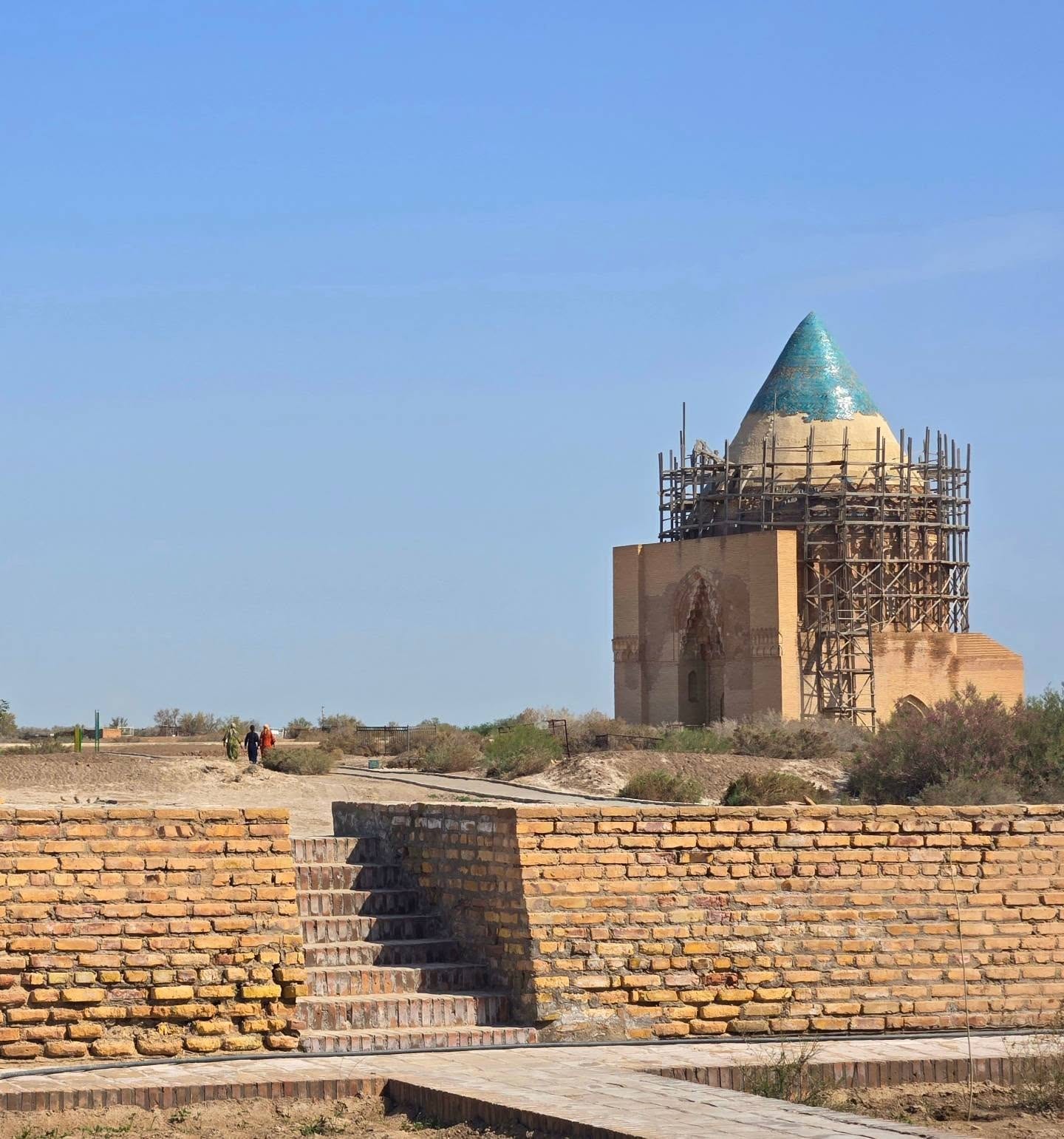
The first couple of days in Turkmenistan were characterized by long drives on some of the worst roads I’ve ever seen. After dropping off our things in a lovely hotel, we made the 2 hour trek to Turabek Khanum Mausoleum. To be honest, the site was rather underwhelming in comparison to the mosques we saw in Uzbekistan except for one thing: these UNESCO heritage protected sites had never been restored. They’ve survived centuries of invasions from Russians, birds, and the elements.
In Uzbekistan it was easy for me to imagine that the restorations were significantly brighter than the originals, but Darshoguz proved that theory wrong. Though the tiles were broken off and damaged, it was easy to see how vibrant the colors were, even after all this time. Surprisingly few liberties were taken in these restorations, from what I can tell. As I’m not a historian, it’s hard for me to fill in the gaps, and so subconsciously I assumed that there was a level of —creativity— in these restorations.
on-roading in the desert
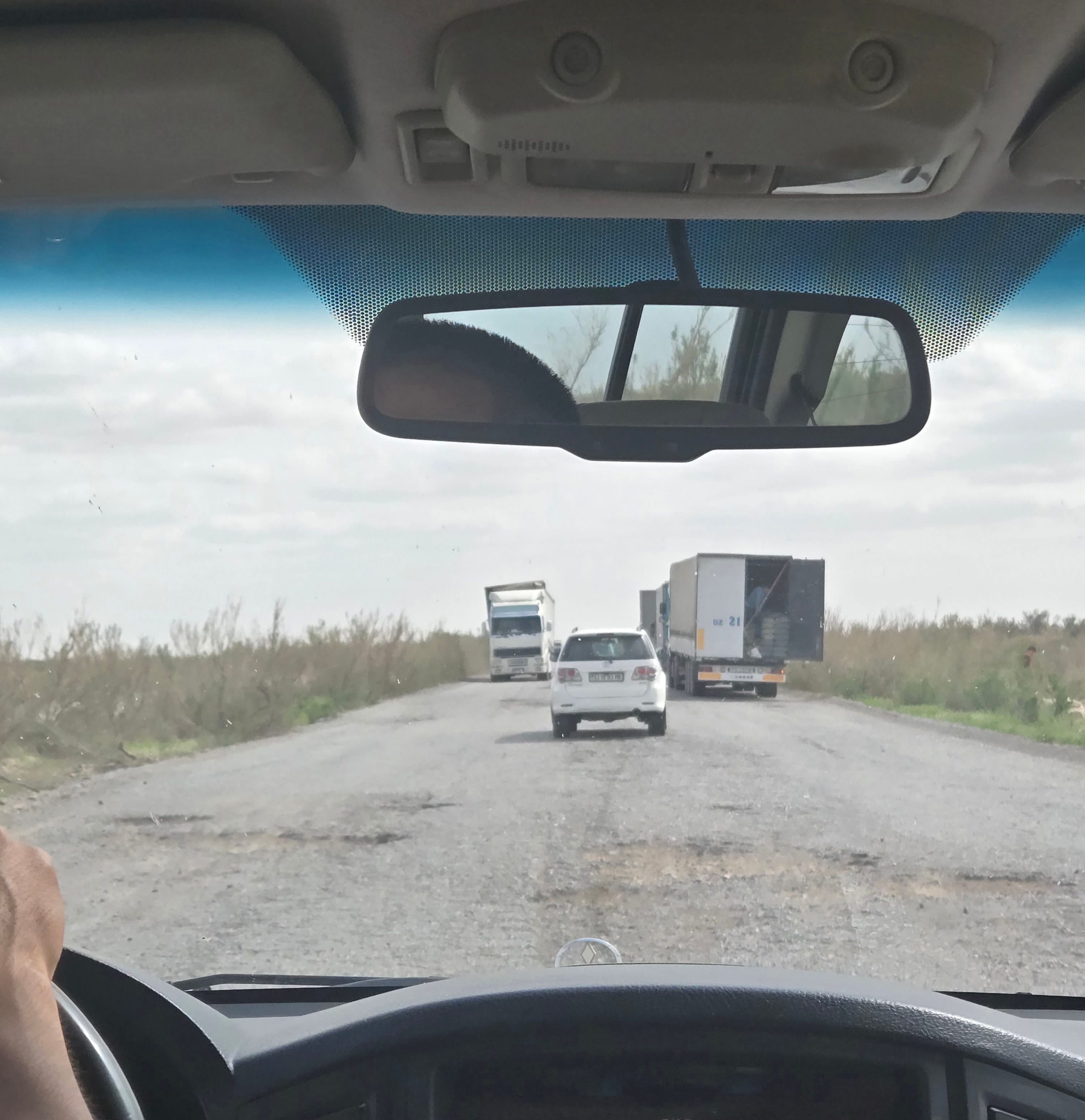
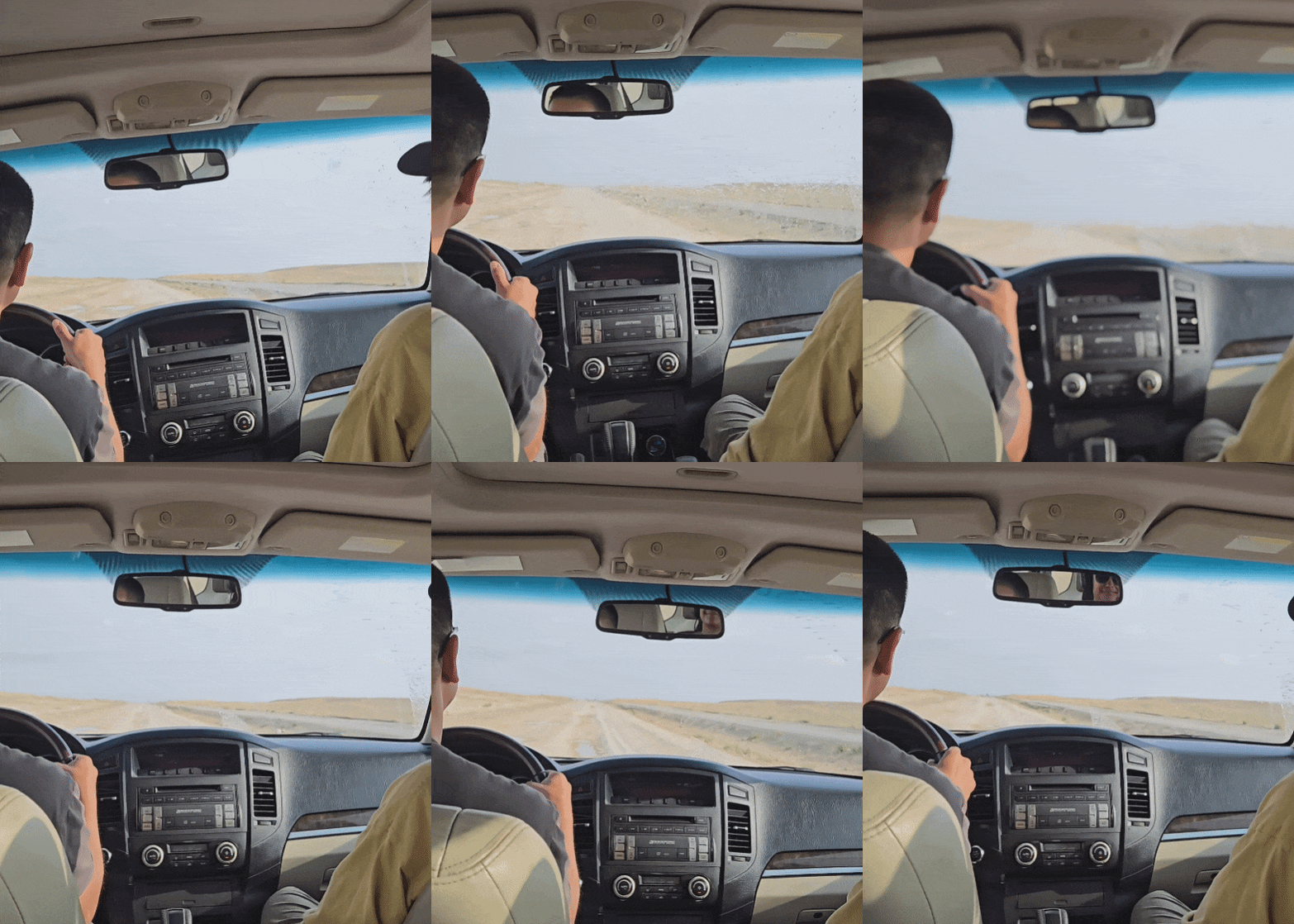
Highways in northern Turkmenistan are closer to obstacle courses than through ways. In all honesty, I’m using the term “road” very loosely, considering parts of the path had no pavement. The roads have not been maintained since their inception in 2005, and the effects of the neglect were obvious. Dirt shoulders were often safer than the roads, and the drivers in our group often drove on gravel or sand because it was faster. Grasslands (presumably) once separated the opposing traffic, but in many places they were traversed so many times they had eroded and only one big patchy highway remained. Our group actually drove on the left for over 100km because of how fucked the right side was. It was truly the wild wild west, and I could not be more thankful that I was not driving. My arm was only slightly sore from gripping the door for dear life for a couple hours.
portal to purgatory
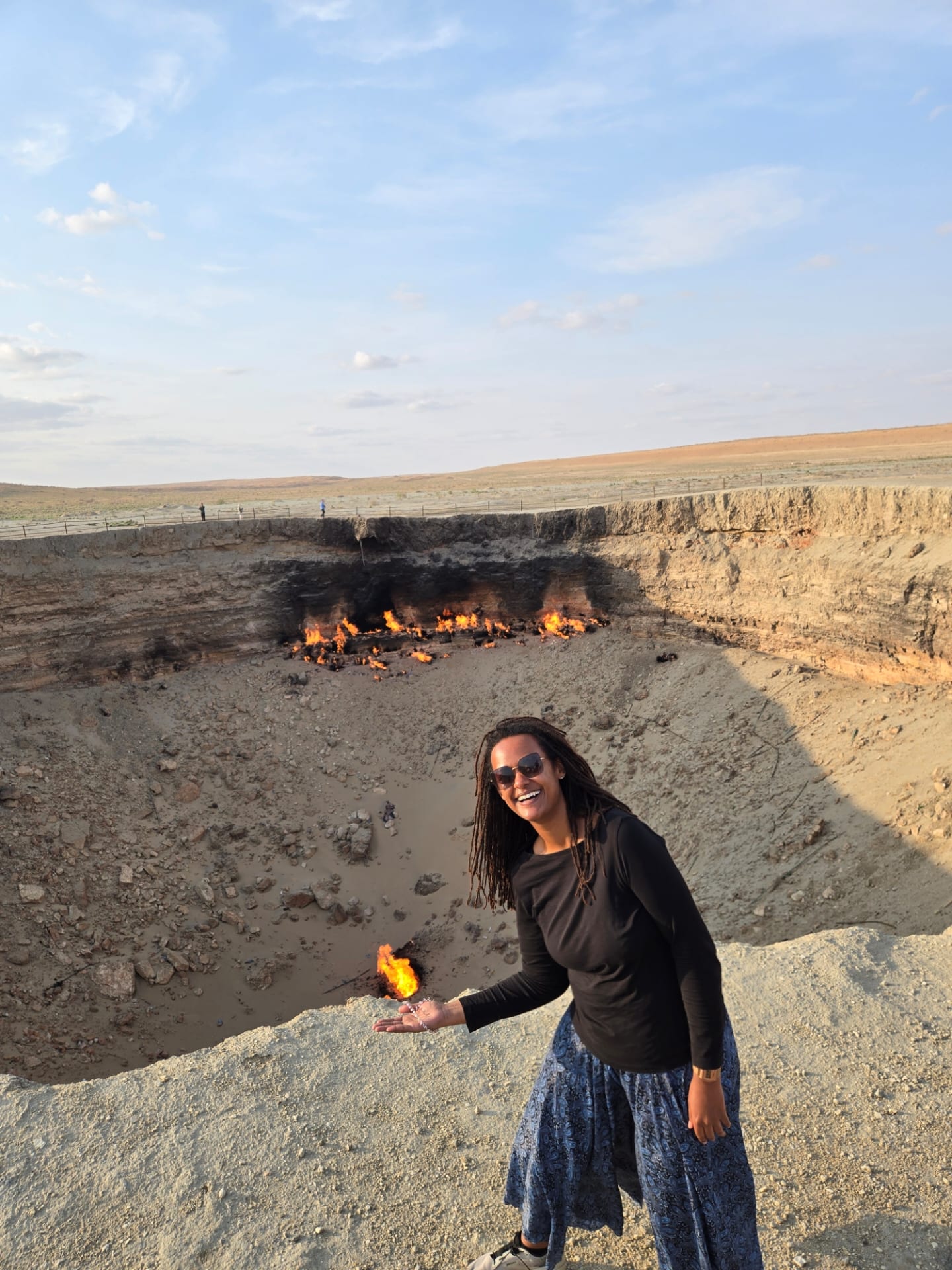
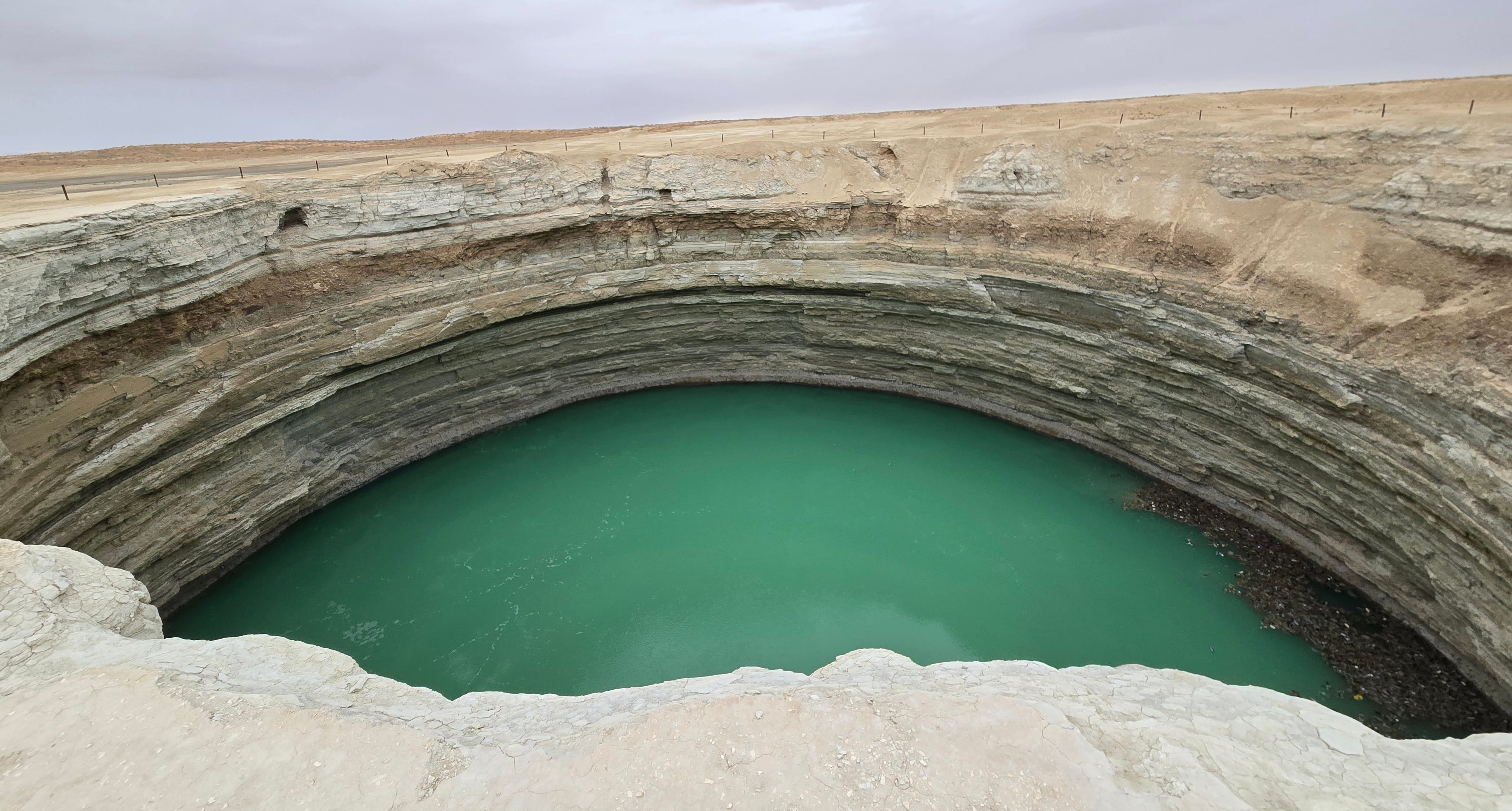
The famous doorway to hell is far from hellish now. Craters formed from disaster and set alight to a raging inferno 50 years ago now only flicker weakly as they lose their life source. Even though I know this is environmentally for the better, I still mourn the portal to Hell. At least at night you can better feel and imagine that hellish energy because the heat was surprisingly strong. If only we had marshmallows.
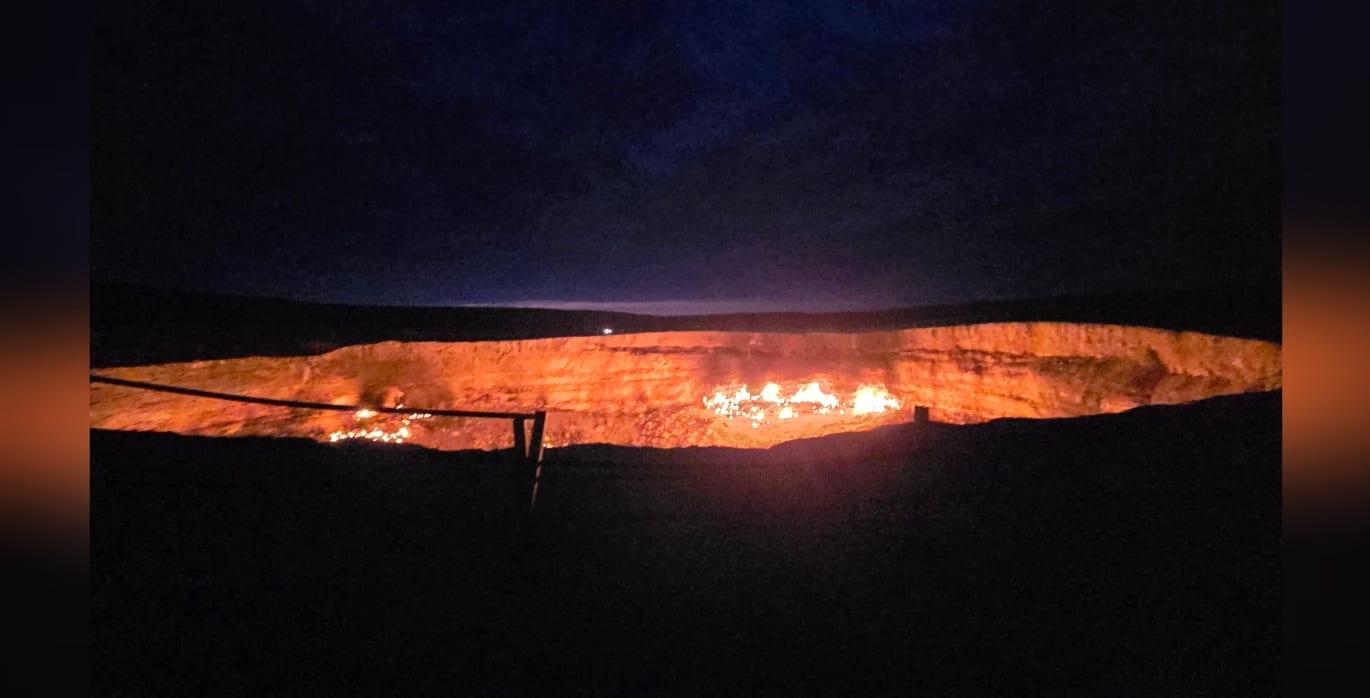
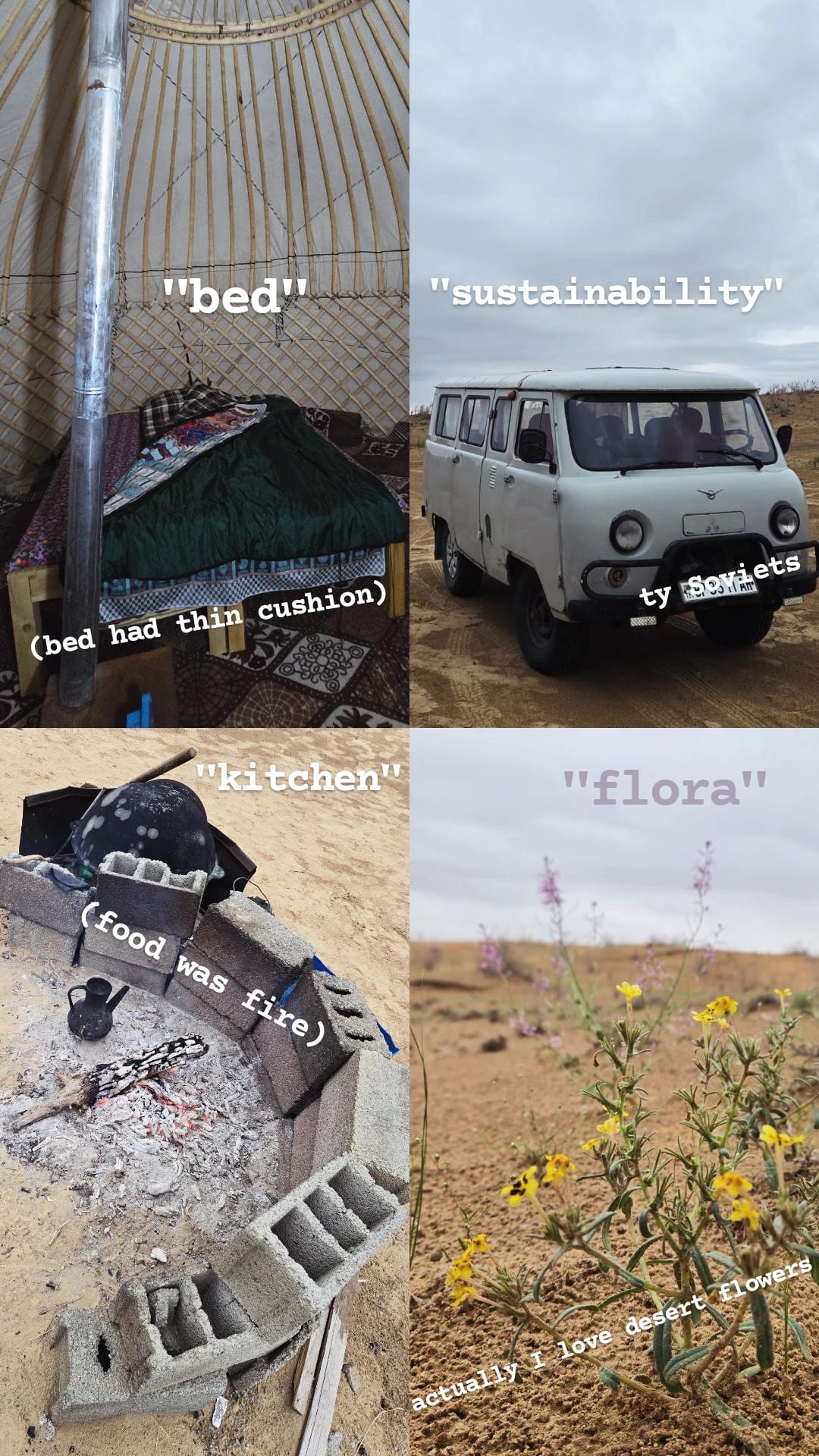
Desert camping this time around was significantly better (than Uzbekistan), and even gave our group one of the best meals we had to date on the trip. Cooking chicken/meat over coals will always yield better flavor. Unfortunately, the ‘bed’ was little more than a plywood platform with a mat on top, but I managed to sleep better than in the Uzbek desert. As a bonus, before setting off in the morning, we got to see the "portal to paradise" (my name for it) too.
a birthday in Mary
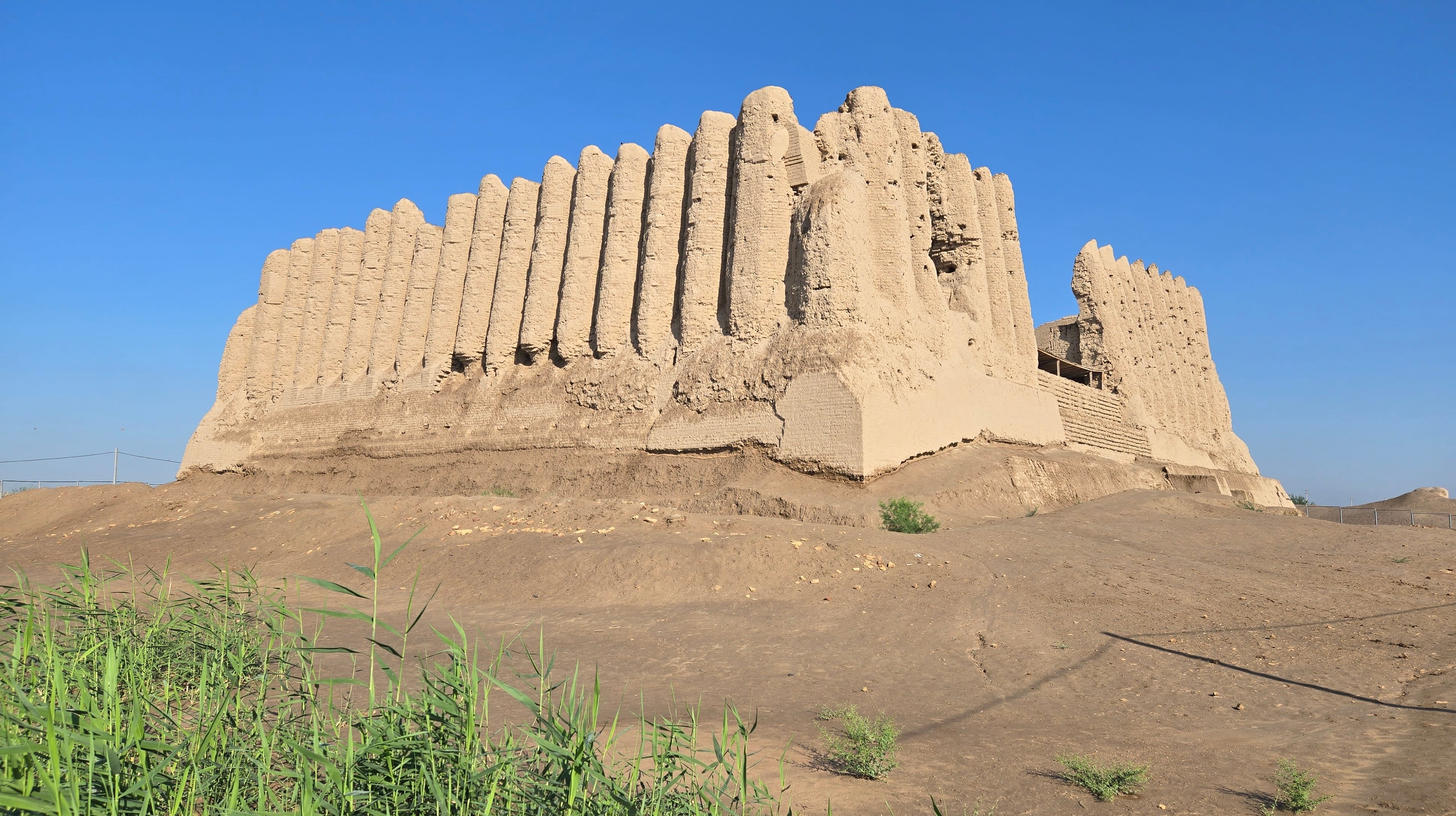
Mary—or Merv, depending on the translation—ended up being where I spent my 30th birthday. It was absolutely exhausting, with a 4am wake-up call for a 6am flight to more ruins and mausoleums. While they were beautiful, I was running on empty after the prior two weeks. Still, I did enjoy seeing the Khoja Yusuf Hamadani Pilgrim Center. The kitchens we walked through housed an industrial-sized operation of food for the community, which was both charitable and beautiful. We did also see one of very few (if not the only) churches on this trip, courtesy of the Orthodox Russians during the Soviet-era.
This was the last day for the rest of the group, but I made the decision to stay an extra night and explore Ashgabat (with a tour guide of course, as by law we were not allowed to wander unaccompanied.) I cannot overstate how great of an idea this was for me, because the real birthday present was in the capital all along.
aesthetics of Ashgabat
Ashgabat, which literally means “City of Love” in Turkmen, is often described as Las Vegas meets Pyongyang. Las Vegas because it’s flashy and grand, and Pyongyang because it’s monumental, planned, and has spacious boulevards that can feel eerily empty. I can’t speak on the comparisons as I haven’t been to either city, but the vibes sound right.
White marble buildings with gold accents dominate the landscape during the day, and most non-conforming structures are "hidden" from the street by trees. The city is made extra cohesive by only permitting white, silver, and gold cars—the vast majority of which were white, including all big cars and buses. Apparently in the used car markets, cars which were produced black and repainted white are referred to unironically as "Michael Jackson" cars, and consequently have a lower resale value. I managed to see one black car in Ashgabat, which was apparently a government car.
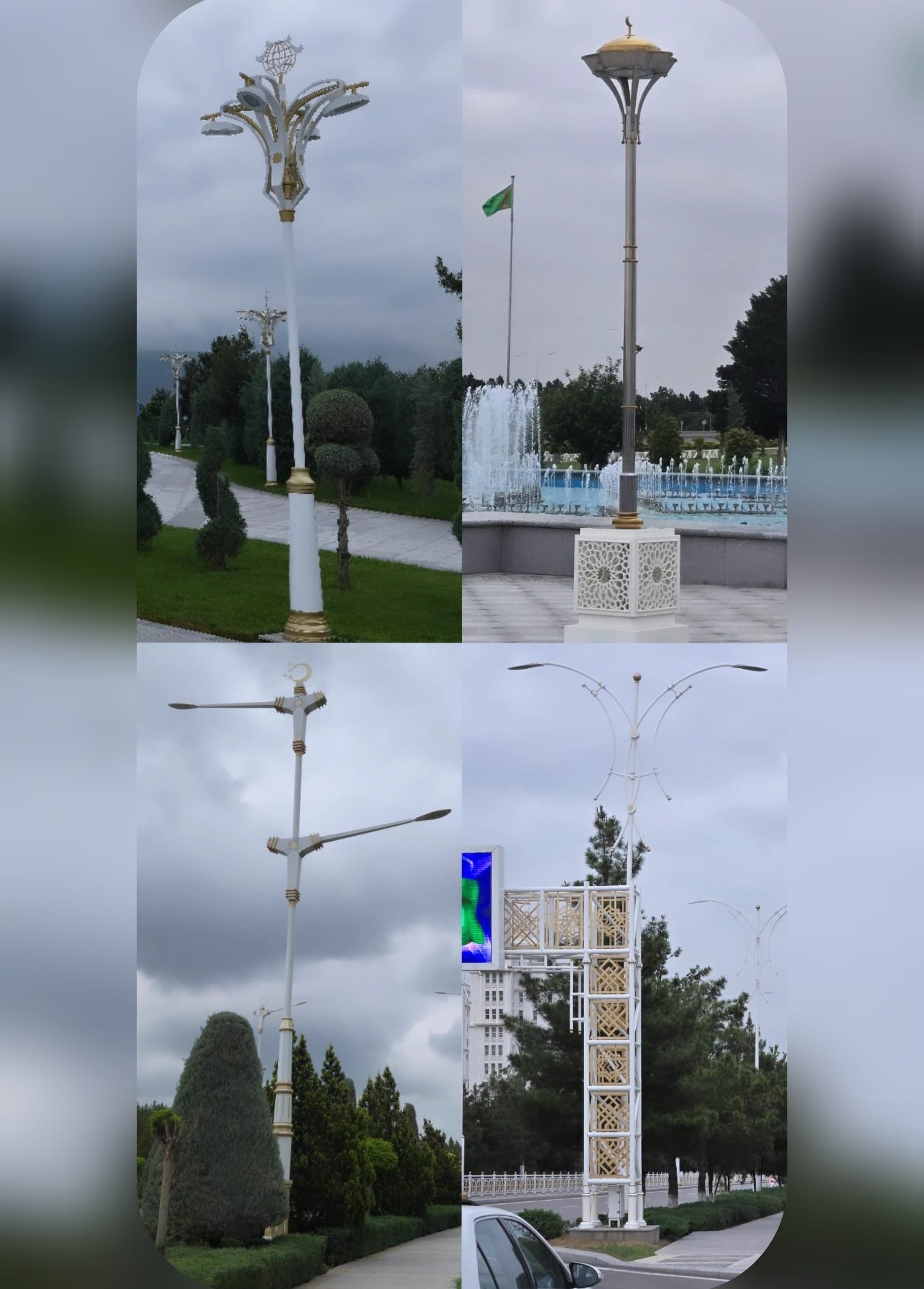
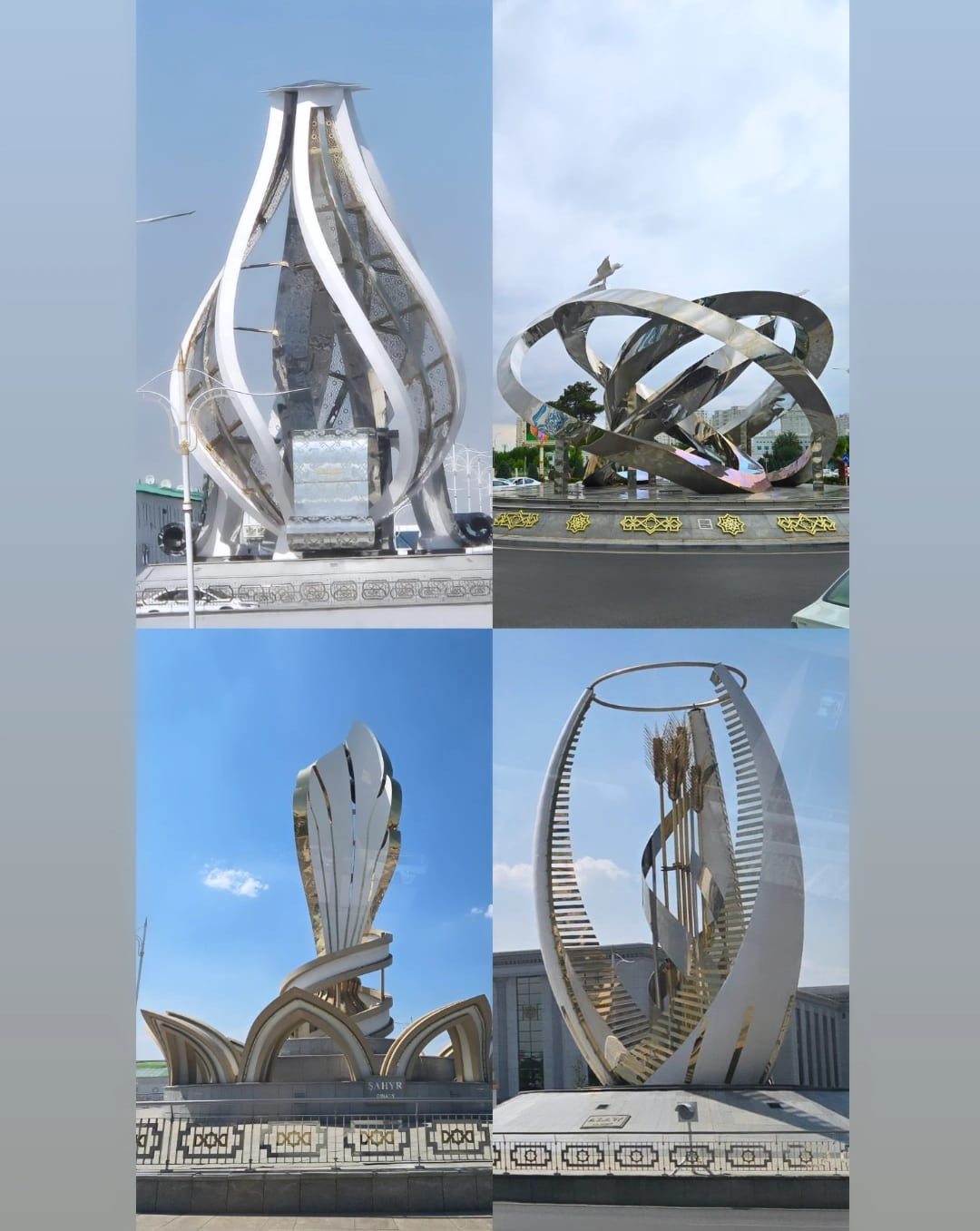
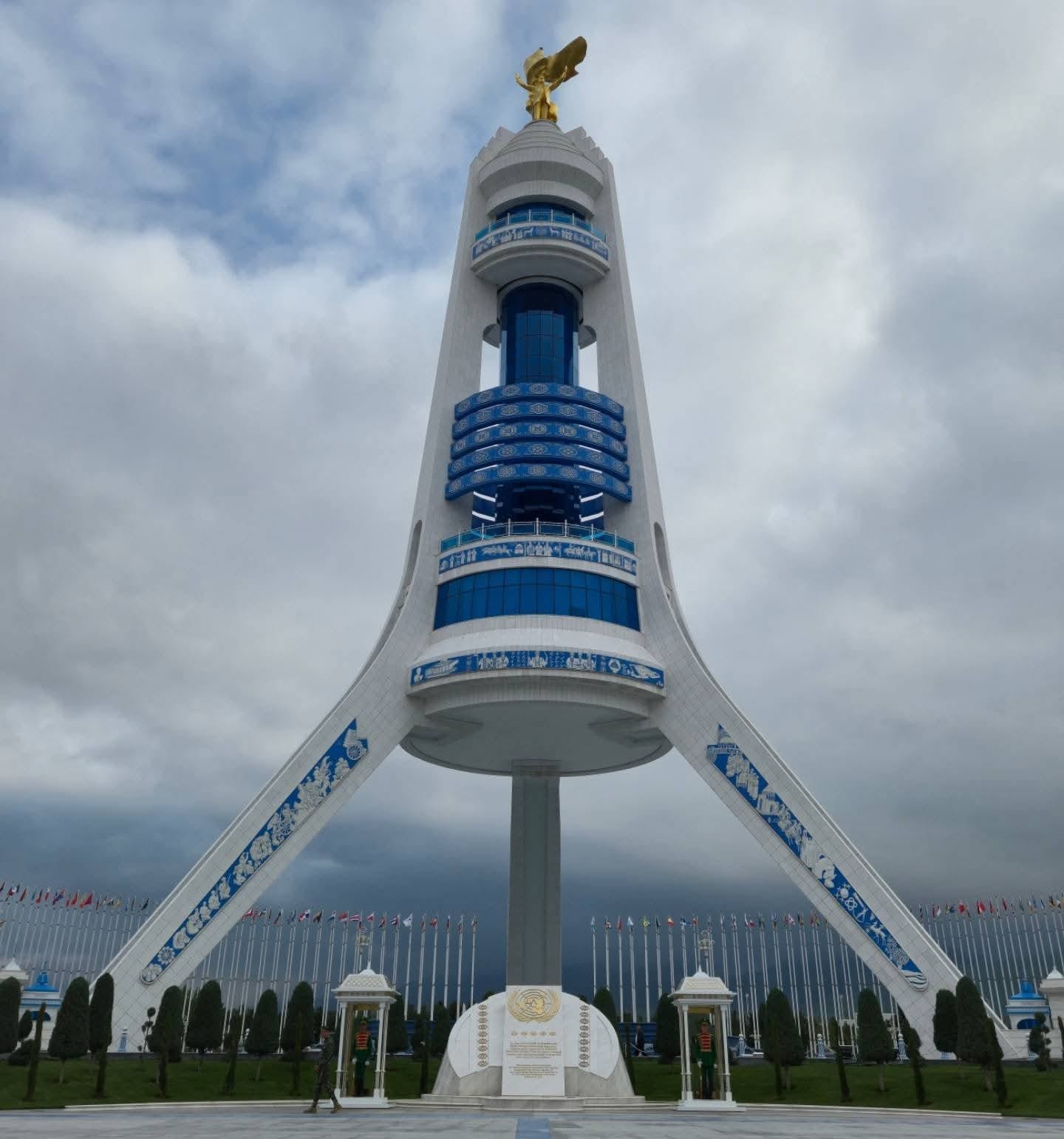
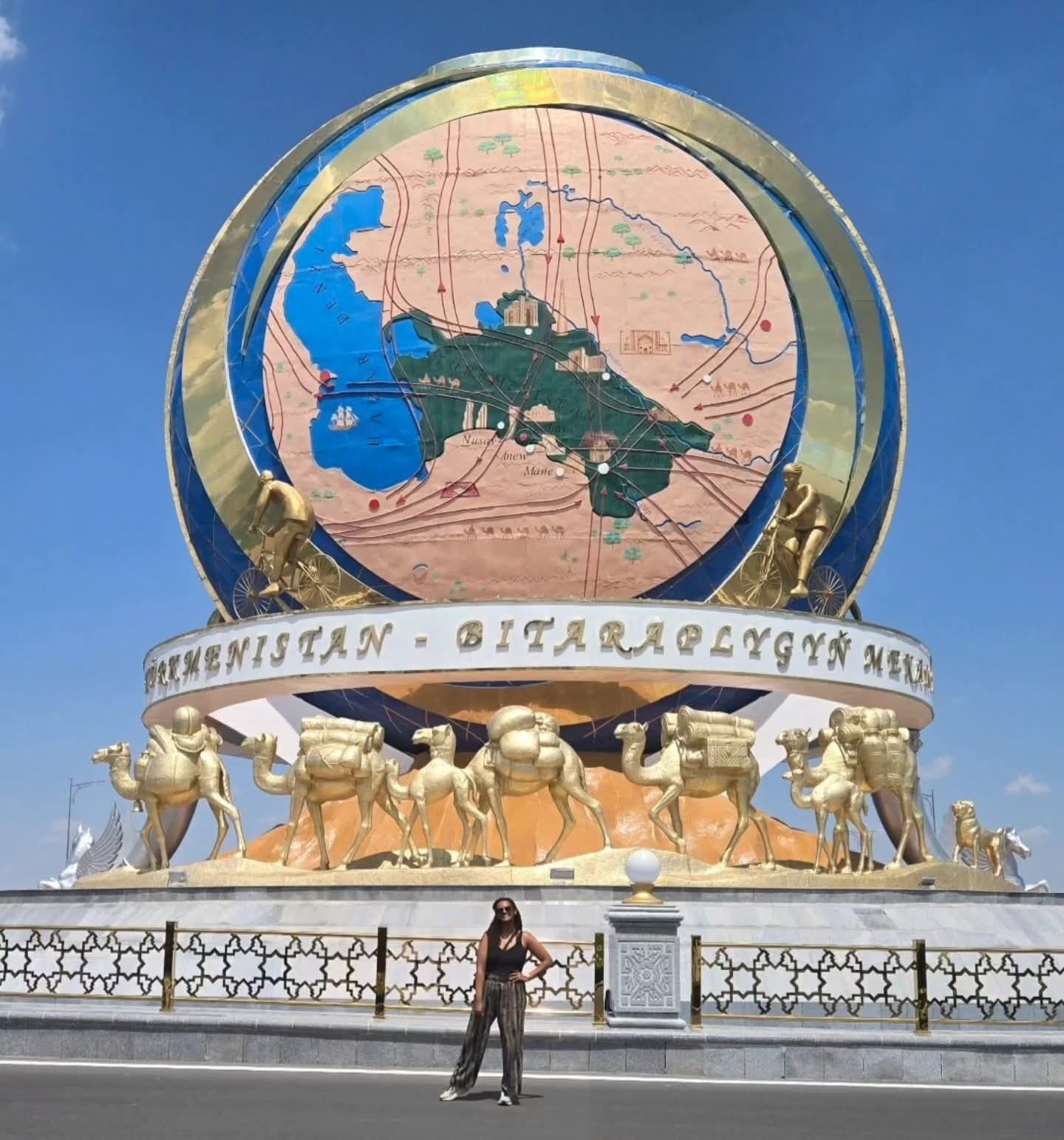
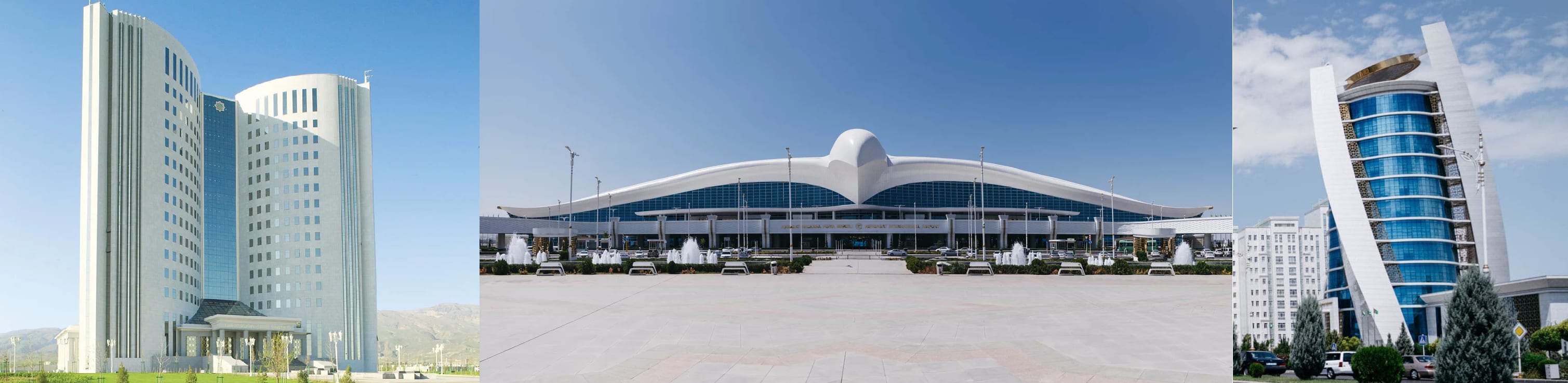
Multiple adverts in the city called Ashgabat a “City of the Future”, and it definitely upholds that title in aesthetic. The city combines Turkmen motifs with sleek lines and modern design to create a city that looks like it’s out of the Jetsons. Even the light posts have cool and topical designs based on the surroundings. Personally, I was a huge fan of the government buildings which incorporated it’s purpose into the design: like the mint with a giant coin on top, the Ministry of Education building shaped like a giant book, or the airport terminals shaped like giant birds/planes.
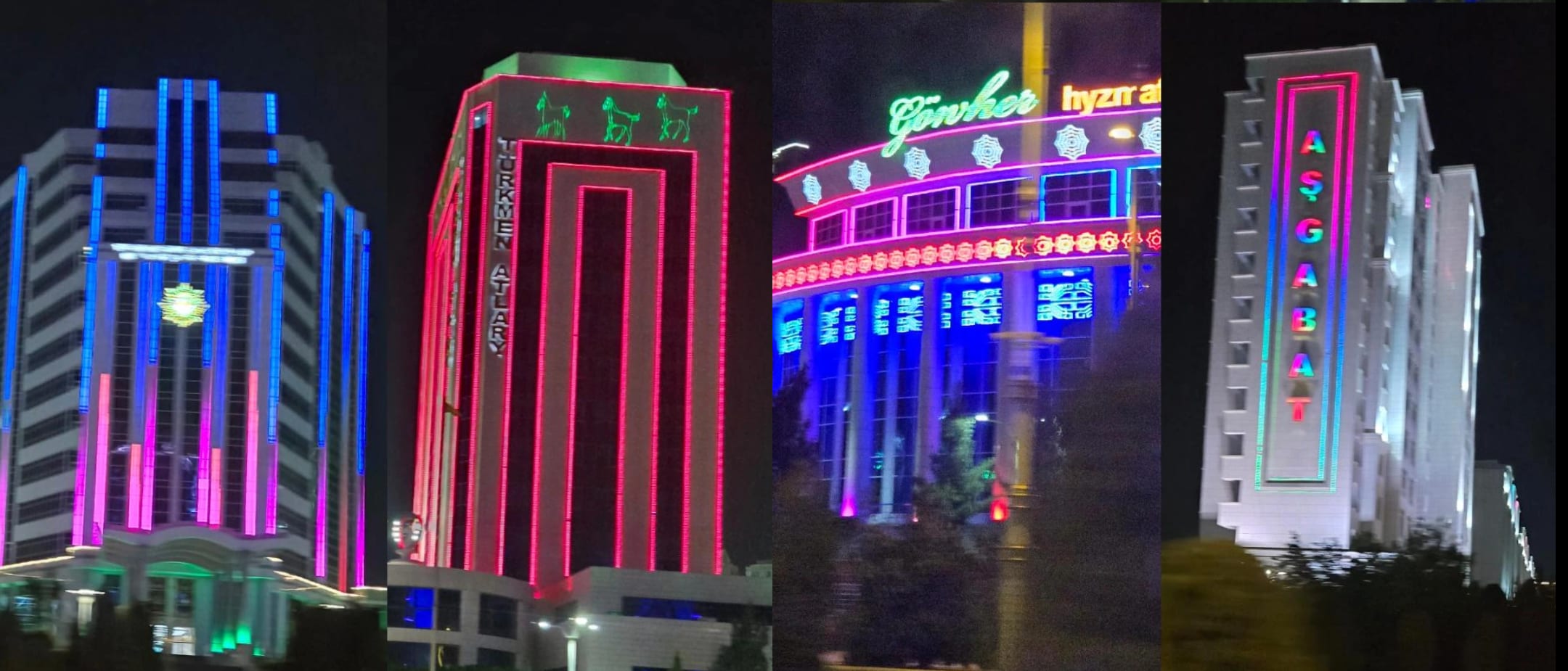
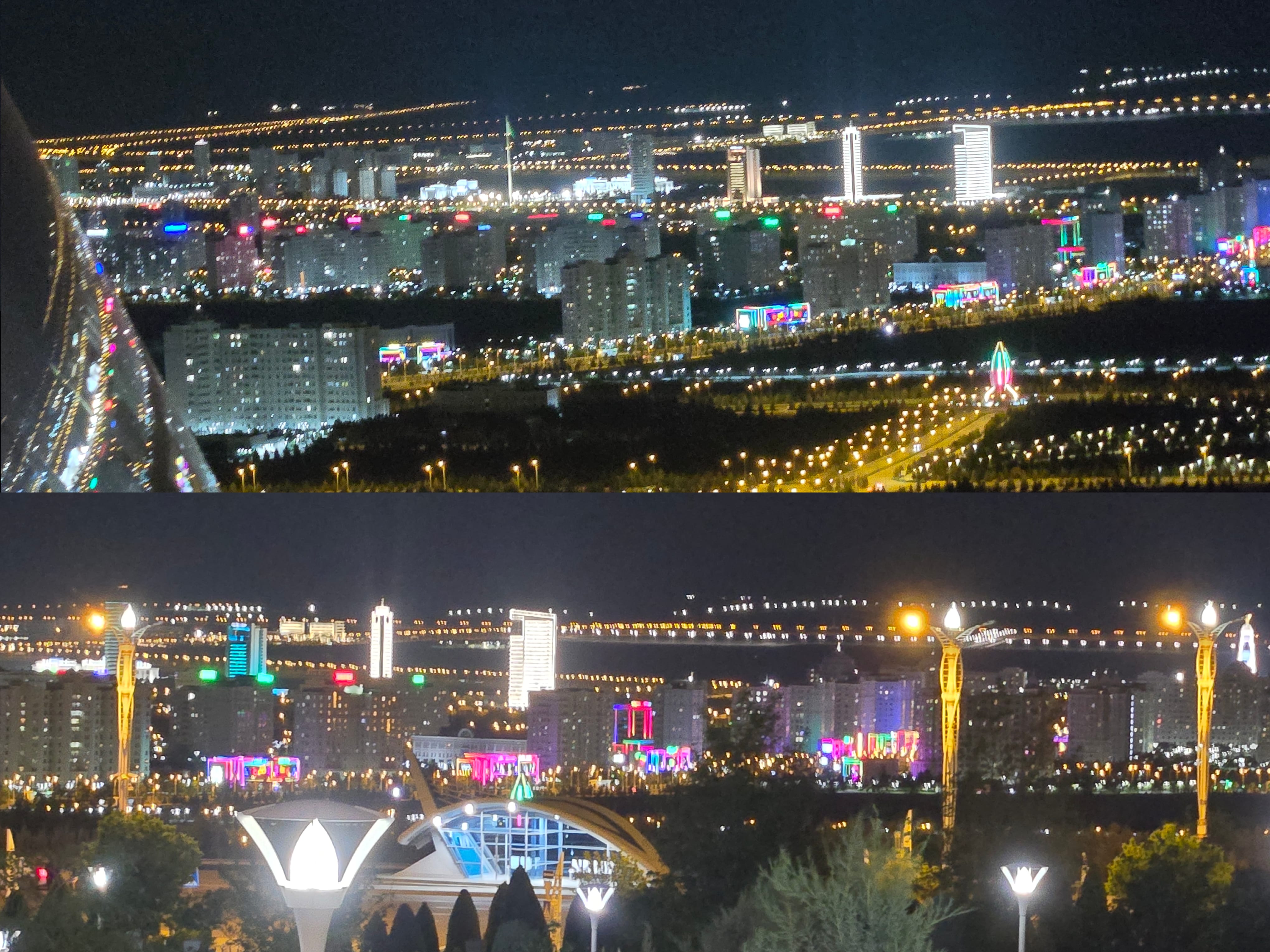
At night, the buildings turned into a different sort of mesmerizing. Electricity is heavily subsidized by the government, and it is obvious in the light patterns which highlight and outline the buildings every single night. Beyond color changes, some buildings also show designs. The airport terminals were designed like birds which "flapped their wings" at night using lights. Walking LED camels adorned the side of a hotel, and horses on the Olympic stadium. All this for a city of less than a million people. I can’t help but respect the commitment to and execution of such a vision. Anything is possible when the opposition is negligible.
just a little off
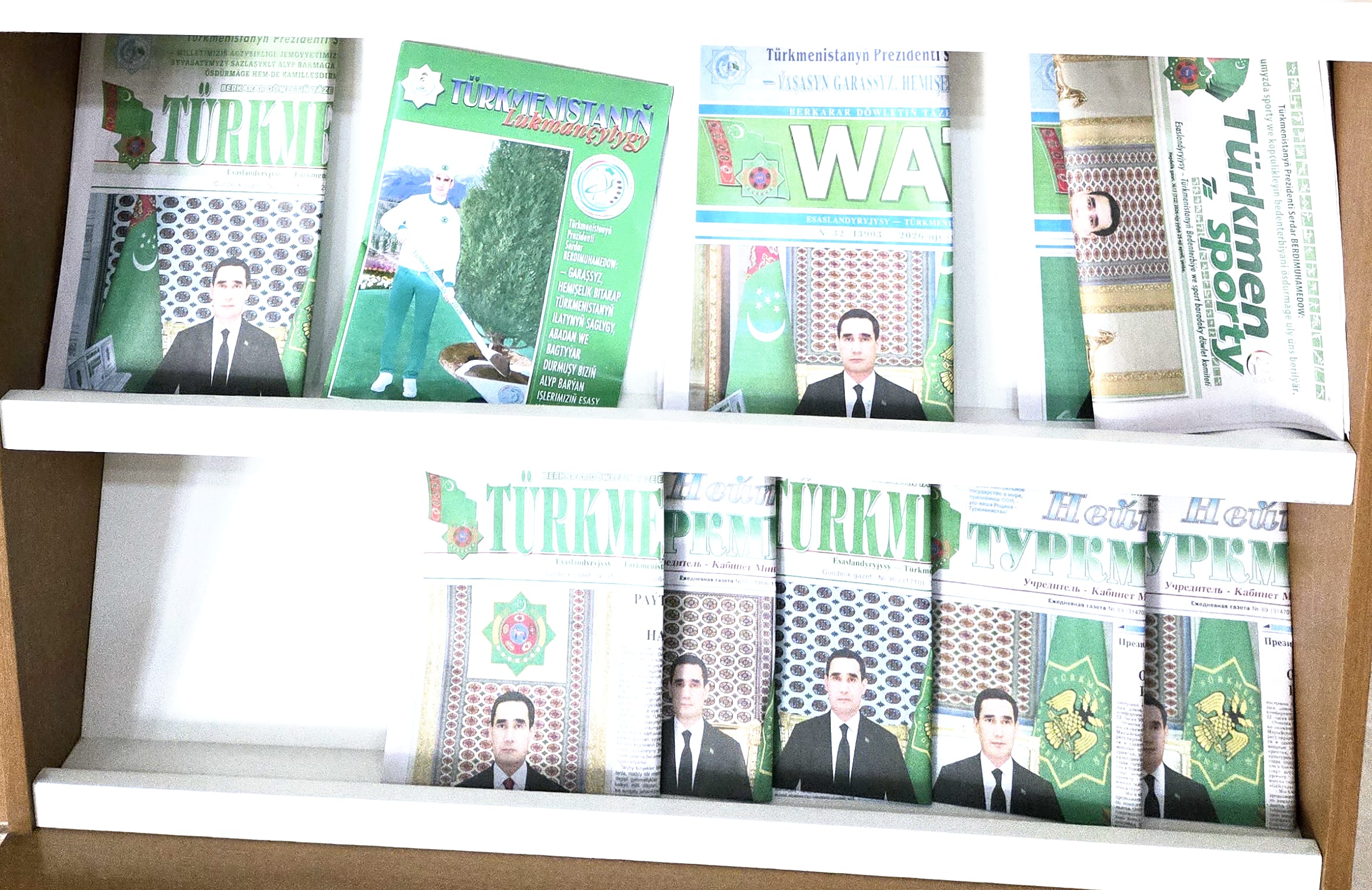
For many of the sights we saw, you had to pay 50 manat (~$3) for the privilege of taking pictures. Many government buildings were technically not supposed to be photographed at all, but it was difficult for me to keep track of which ones to not photograph. It also seemed like we weren’t supposed to take pictures of any pictures of the "President", which felt…off. One of the guides always referred to the leader as ”Our Esteemed President,” which also seemed indicative of more than just speaking English as a second language. The current President also reportedly did not have strong opposition, being the son of the former president and all.
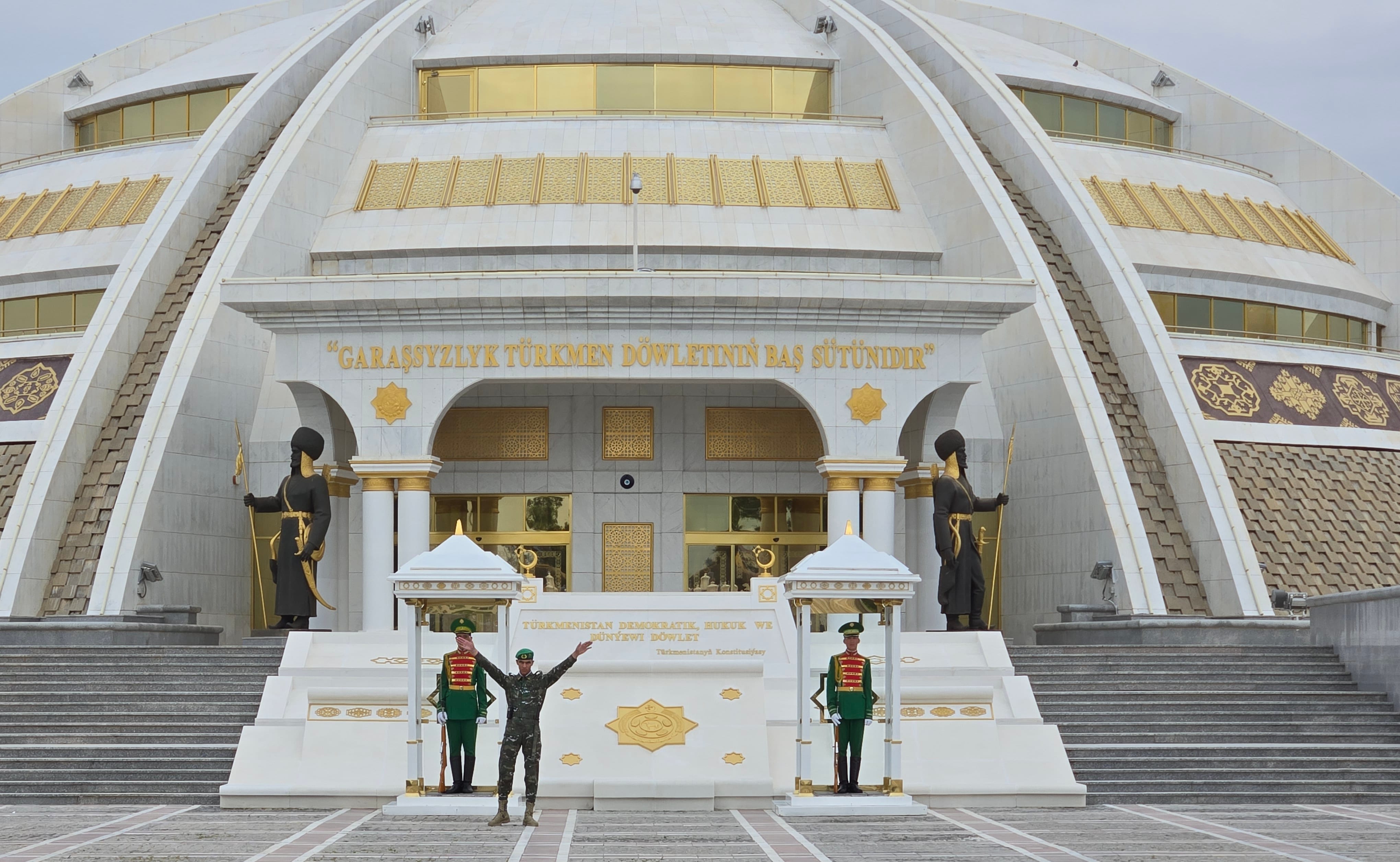
There’s a lot that to be said about the President, but he’s definitely chiller than his predecessor father. Hundreds of statues were removed of the former President, which amazed me because there’s still so many gold statues of him. His touch remains imprinted on Ashgabat. Beyond his image, there were choices in design that I found fascinating. The stairs in Old Nisa were staggered in height because a French President used to like to visit that specific fortress a lot, and he (supposedly) had uneven legs. I’m not sure how that would help him navigate, but it does say something about the planning in the city and the whims of leadership. There’s always a reason for design in Turkmenistan, and it is often a bit odd. Such is life when you have all the power.
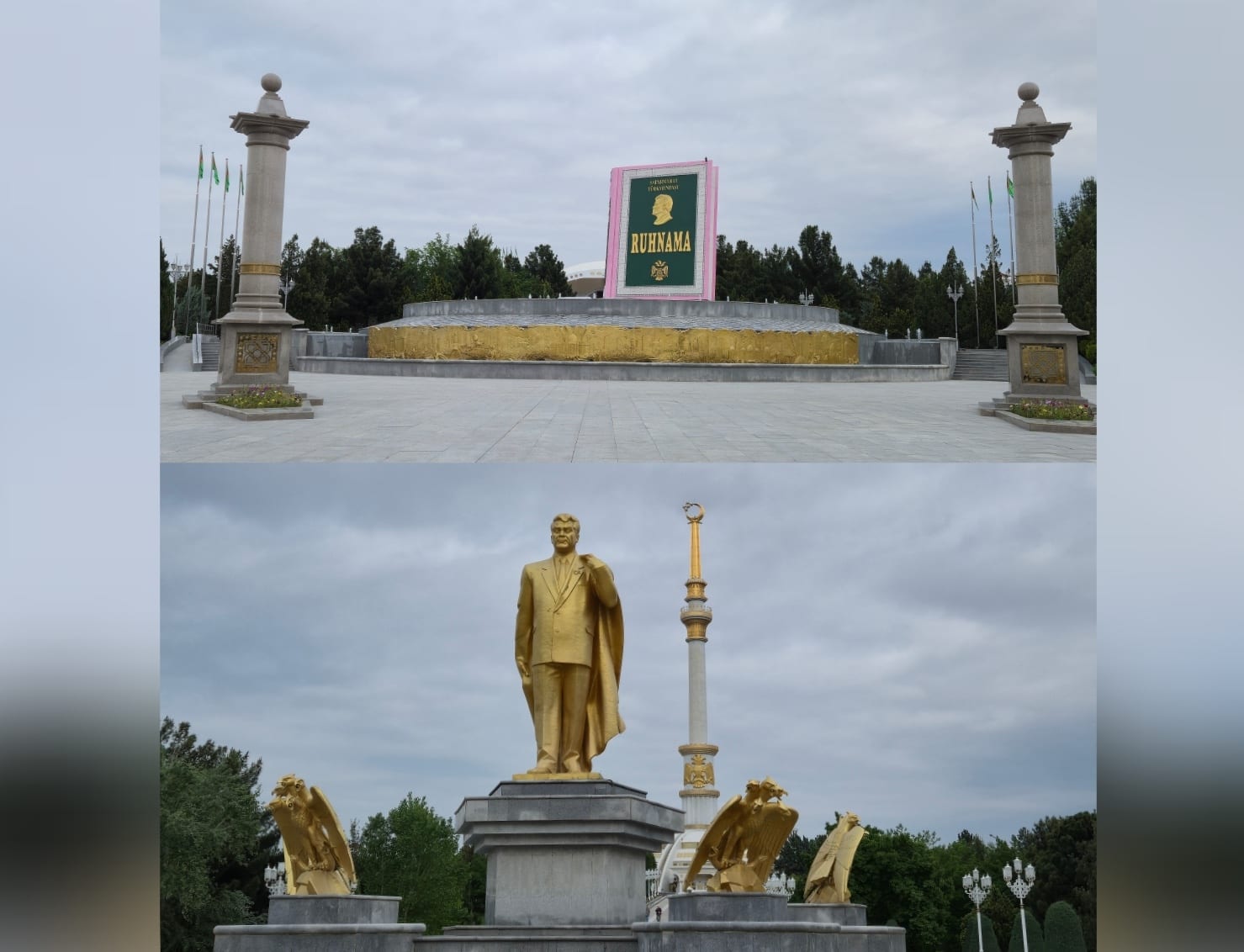
Another fun fact: the first President (according to himself) authored EIGHTY (80!) books, the first of which he dedicated a monument to.
other displays of force
While the electricity was heavily subsidized, the internet was decidedly not. I did not realize how locked down internet was in Turkmenistan, with no access to pretty much any western entertainment or social media (Meta, Google, Reddit, Spotify, etc.) Oddly enough, our hotel in Ashgabat was not subject to this block, but my phone data and every other internet source was. In Darshoguz, I was able to connect to an Uzbek network just long enough for a quick call and a post to my story.
In the spirit of a lack of opposition, Turkmenistan is the only fully neutral country in the world with recognition by the UN since 1995. As our guide described it: "Whether it's Russia and Ukraine or Palestine and Israel, Turkmenistan does not pick a side." Get fucked Switzerland. If neutrality is siding with the oppressor, why can't the oppressor also be neutral amirite???? The more I thought about anything the less the country made sense to me. I hope I make it back one day!