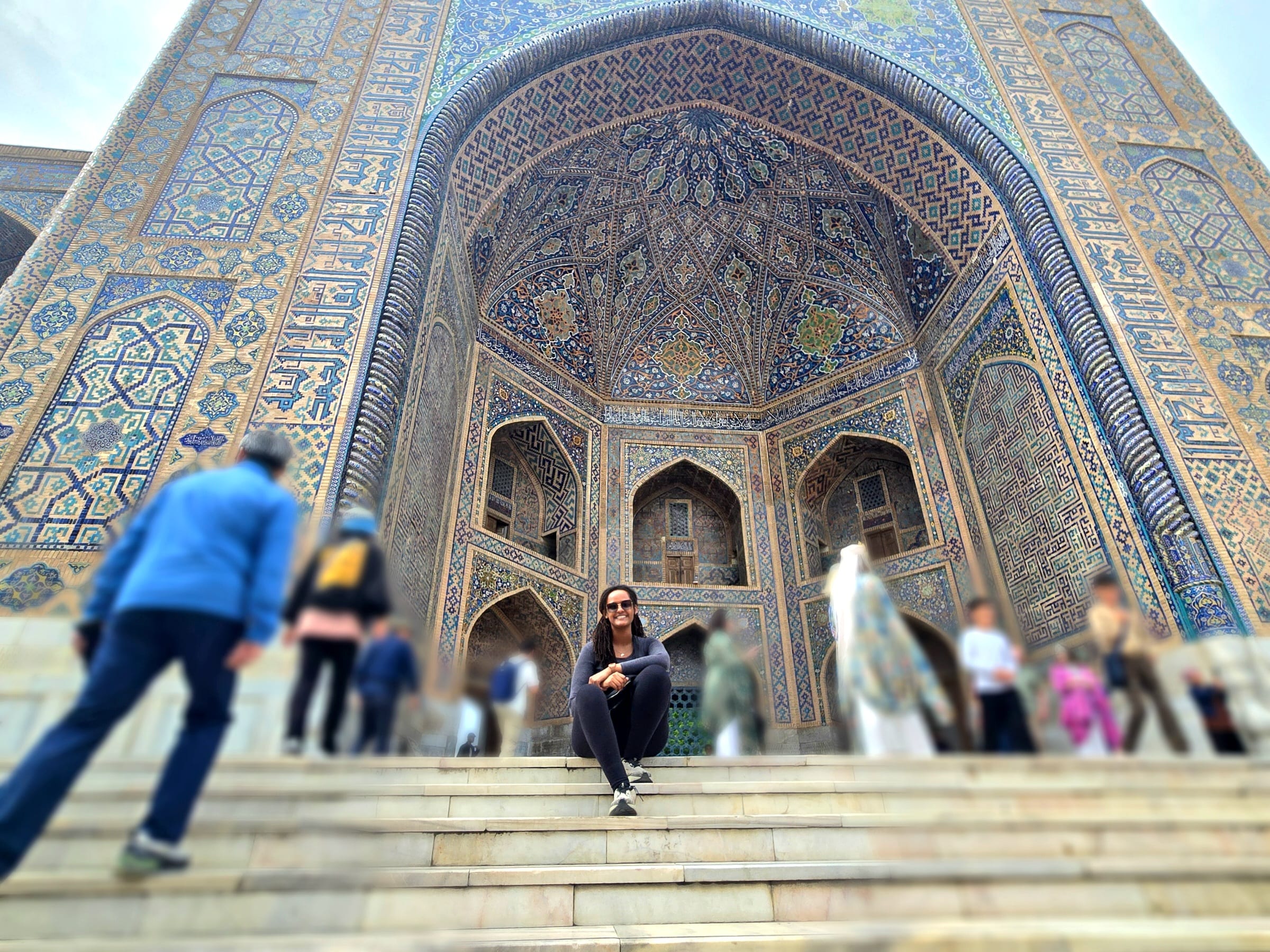
Under the Uzbek Influence
Uzbekistan was arguably the country I was most excited to see. Beyond the blue jewels of Central Asia, Uzbekistan was the Soviet hub for all of central Asia, of which Toshkent was the “capital” of sorts of the region. As I extricate my beliefs from the claws of American propaganda, I’m very intrigued by how communism and its fail actually affected its constituents. I also love a marriage of cultures. I once joked that after visiting Italy and Turkiye, my experience averaged out to a visit to Greece. While I was mostly joking, it is interesting to see how accurate the statement is and is not.
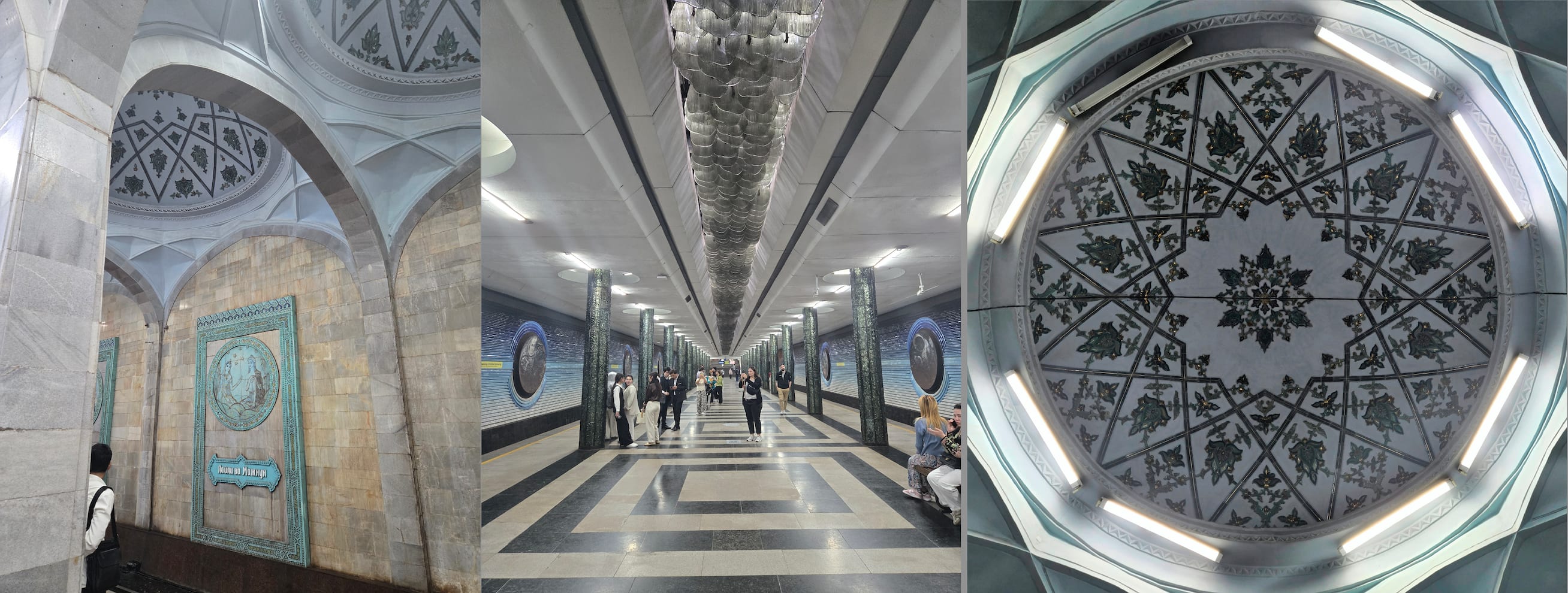
Whereas Tajikistan was closer in culture to Persia, the Uzbeks are distinctly Turkic in culture. In fact, the first day the guide said: “Uzbekistan has Turkish culture, Russian government, and a Chinese economy.” Never have I ever had so many follow-up questions, chief of which was “what??????” As the trip went on though, the marriage of cultures was demonstrated in the 5 Ms: markets, mosques, mausoleums, madrasahs, and museums.
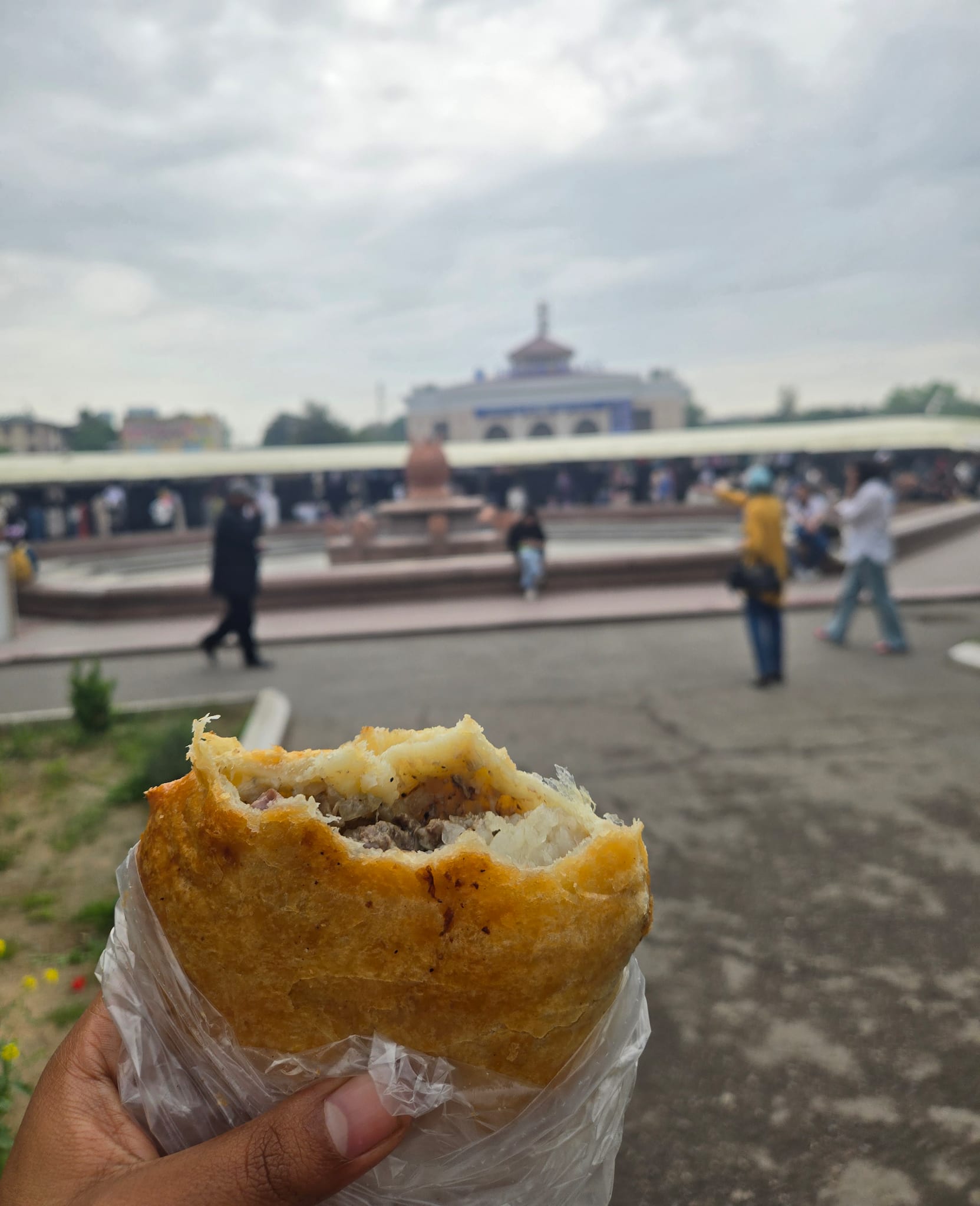
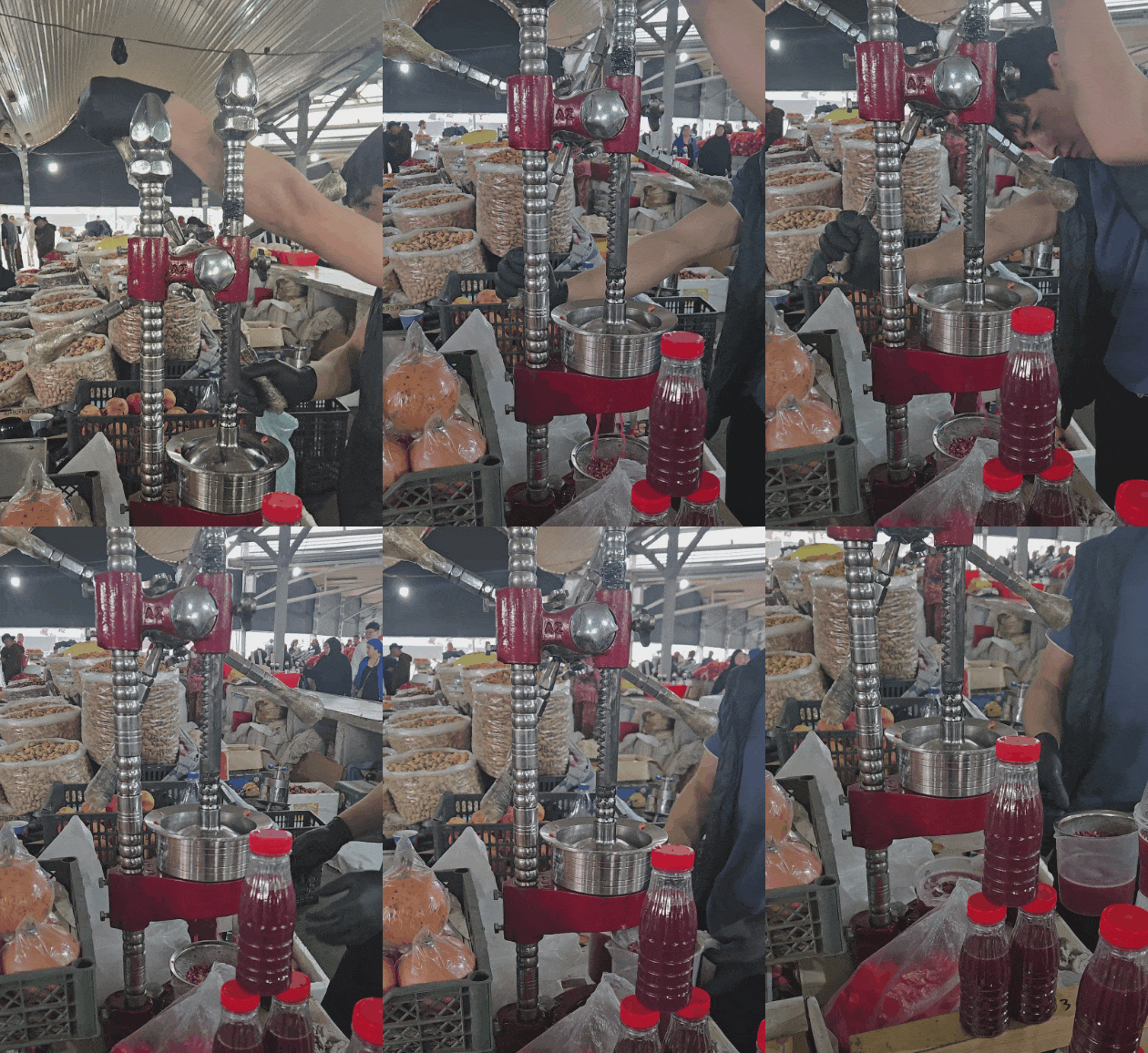
The destination only added to the beauty of this journey, as the market we went to was a delight. Somsa is the Uzbek version of dough filled with meat, and the somsa from the market in Tashkent was the best I had the entire trip. I also treated myself to some freshly squeezed pomegranate juice. We may no longer be in a Persian country, but the lovely pomegranate knows no borders.
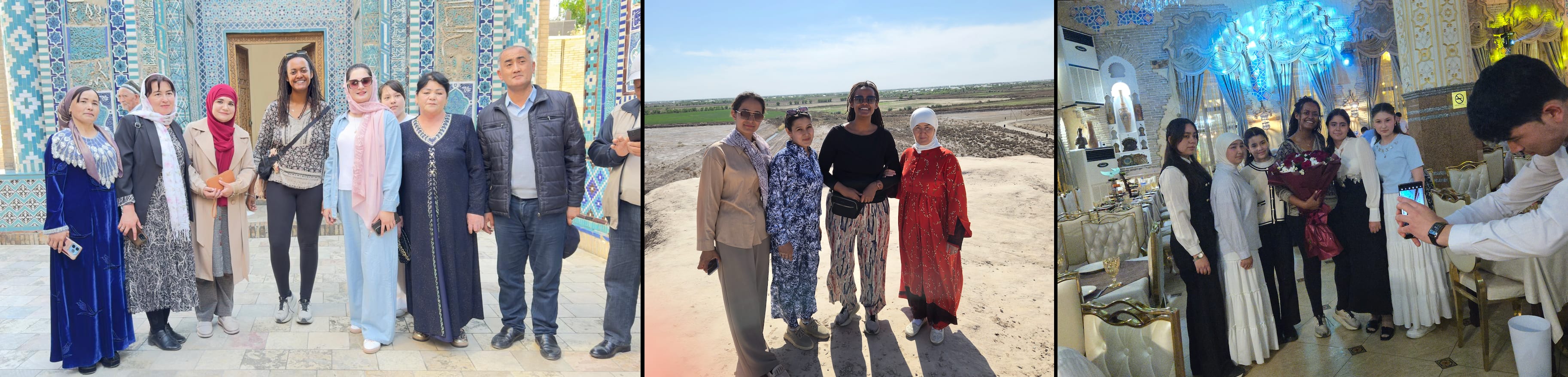
Uzbekistan very much forced me to lean into my status as a quasi-celebrity, as people really had no issues photographing me, asking me for photos, or talking to me. At the market I did enjoy an interview that some local teens did for their english class, and for the most part people were actually very kind. Someone at the border even did the Wakanda Forever salute, so a lot of the interactions were also plain funny.
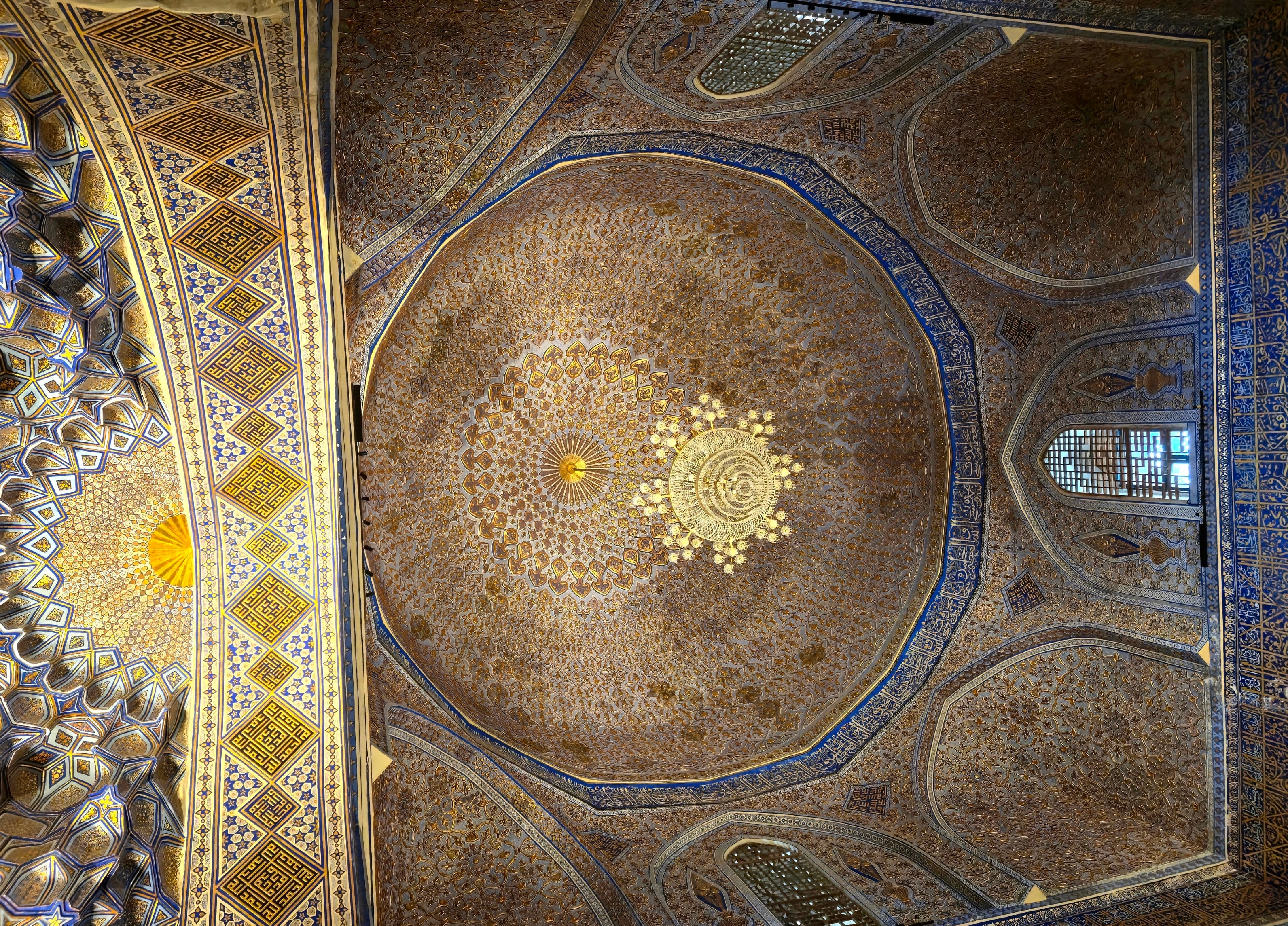
As we started our journey of 1000 mosques, I realized that the “medieval geometric” patterns that I like in general and especially for my journals is actually Islamic. It does explain why I find it difficult to find journals I like and why I think mosques are some of the most beautiful religious structures. That, and they trend towards my favorite colors: blue and green.
While I wouldn’t exactly recommend central Asia gastronomically speaking, I had two dishes in Samarkand that I will be dreaming about for the rest of my life: crispy eggplant salad and a bone marrow kebab. Neither is a dish unique to the region but they were some of the best renditions of them I’ve ever had in my life.
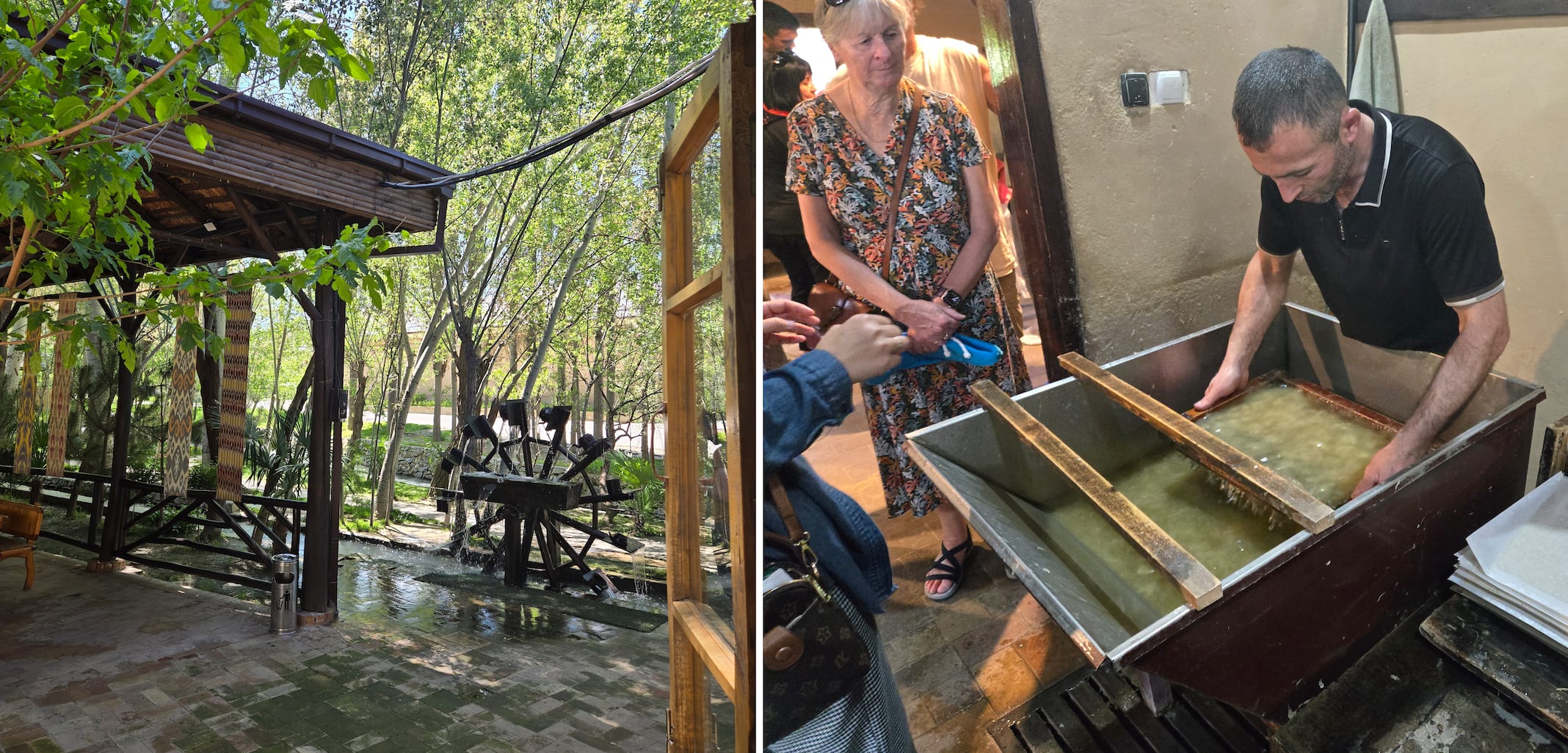
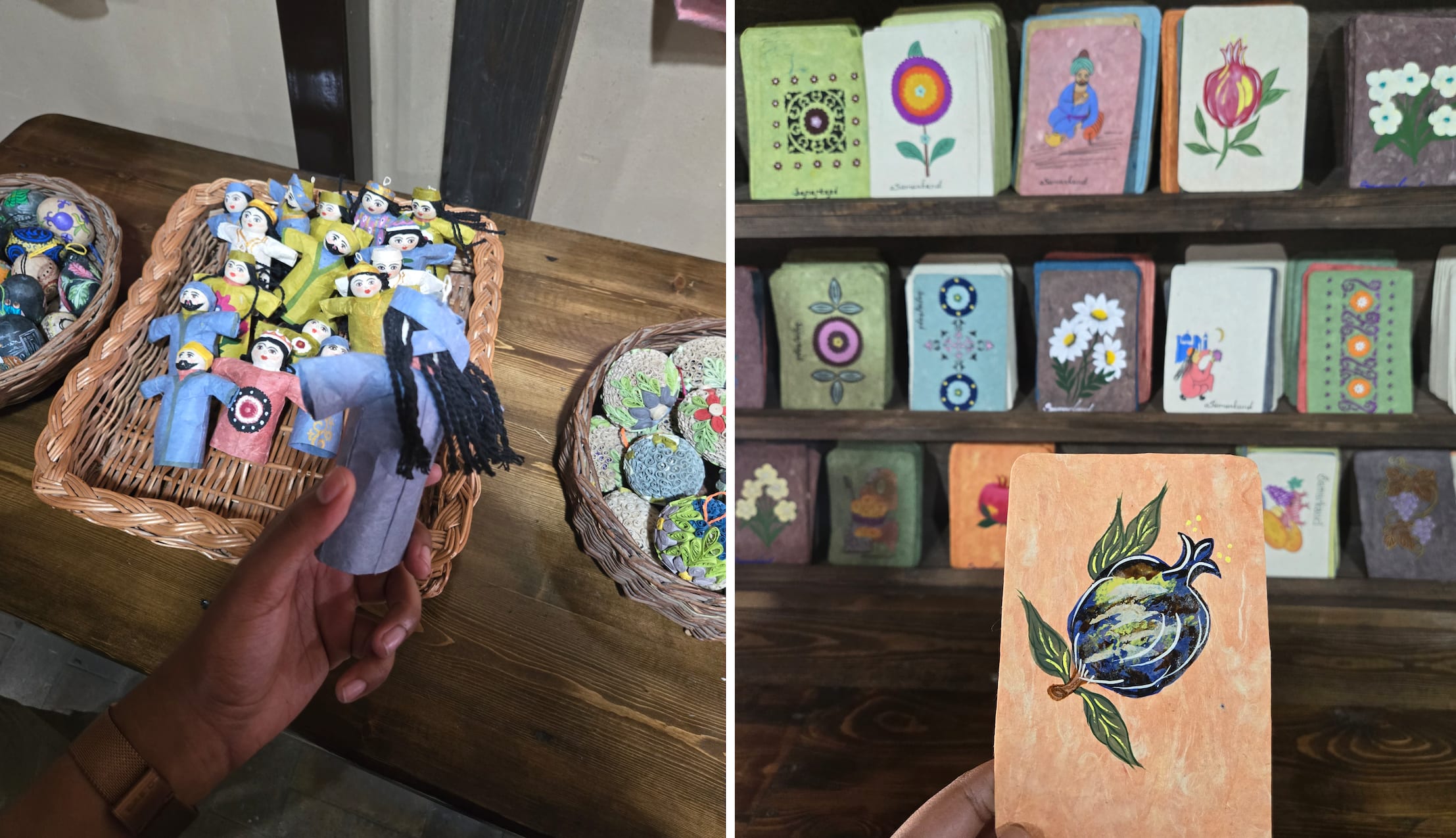
Our last outing in Samarkand brought us to the mulberry paper factory. Even though I know that factories existed before modern machinery, I’m still amazed at how much infrastructure predates the industrial revolution. Beyond your standard writing paper, it can also be used in other goods like bags, masks, and decor. The utility justifies its bulk manufacturing, and that manufacturing process is a marvel.
Khiva & the desert
The vast majority of this post was written in Uzbekistan, but I put off writing this portion until just before posting. This desert was by far the worst night of the entire two-week trip, because the accommodations were not accommodating. They didn’t have enough yurts for everyone, the bathrooms and showers were unusable, and the beds were definitely dusty (which I will give a pass for given that it’s a desert) and possibly dirty. As in unwashed sheets. Unfortunately the desert night does require the use of blankets, but I didn’t take off my clothes, touch the pillow to my hair, or even open my suitcase except to brush my teeth. The bus driver might have legitimately had a better night on the bus than our guide in her yurt, who also woke up at 4 AM to a worm on top of her blanket.
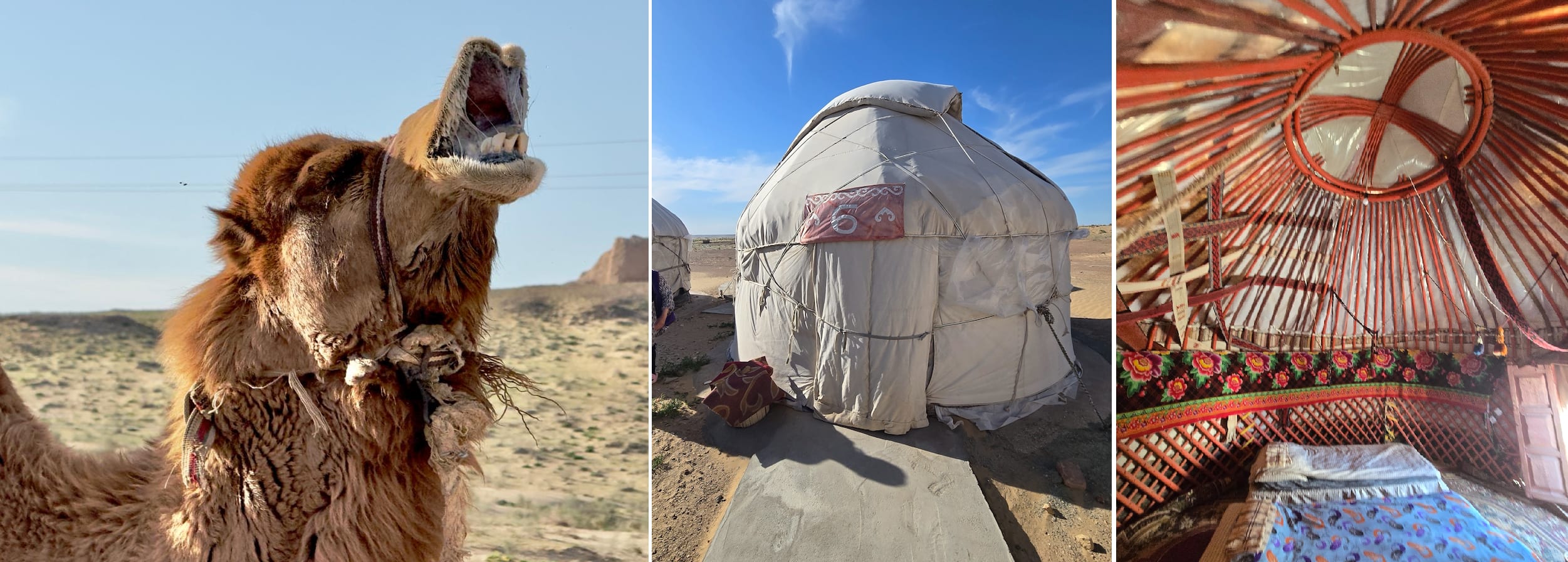
Ayaz-Khala was slightly less enjoyable to see due to the yurts that awaited us after, but I enjoyed the walking. I also liked seeing the camels in front of the yurt complex. The sunset was solid, and the crowd was manageable—definitely visible, but not obtrusive, unlike the yurts.
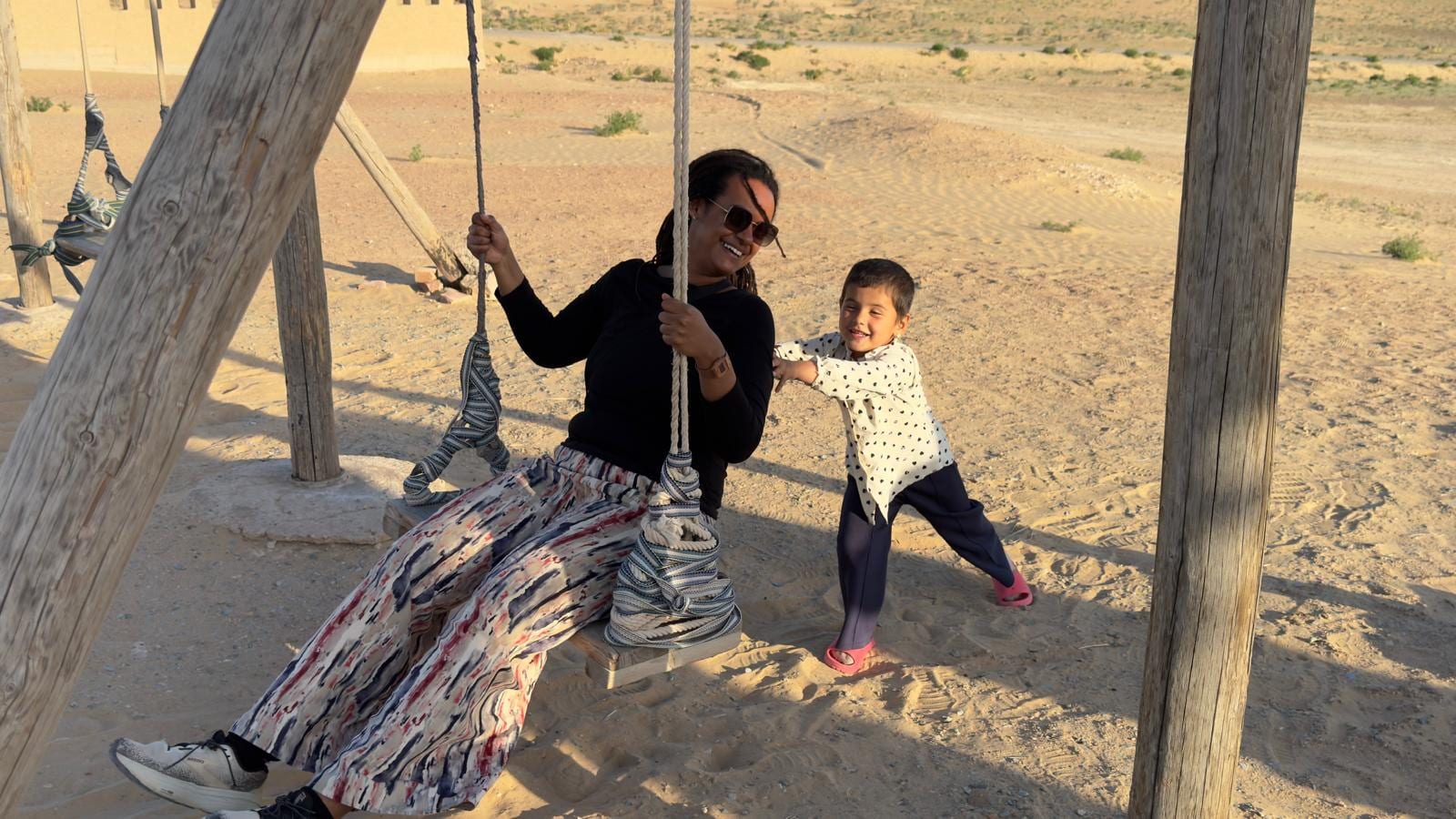
Bukhara
The train to Bukhara brought me to another love of this life: a walkable town. Truly, the few bus rides we took in this town were either optional or primarily for our luggage. The sun did challenge our desire to exercise this walkability but we powered through! It was here we departed briefly from the predominantly Muslim history of Uzbekistan into the Jewish quarters. There’s a millenia-old torah, a still-operating synagogue, and a number of preserved and restored sites of the Jewish community there. It seemed a part of the history like any other site, with really only the Jewish symbolism separating it from other 5 Ms.
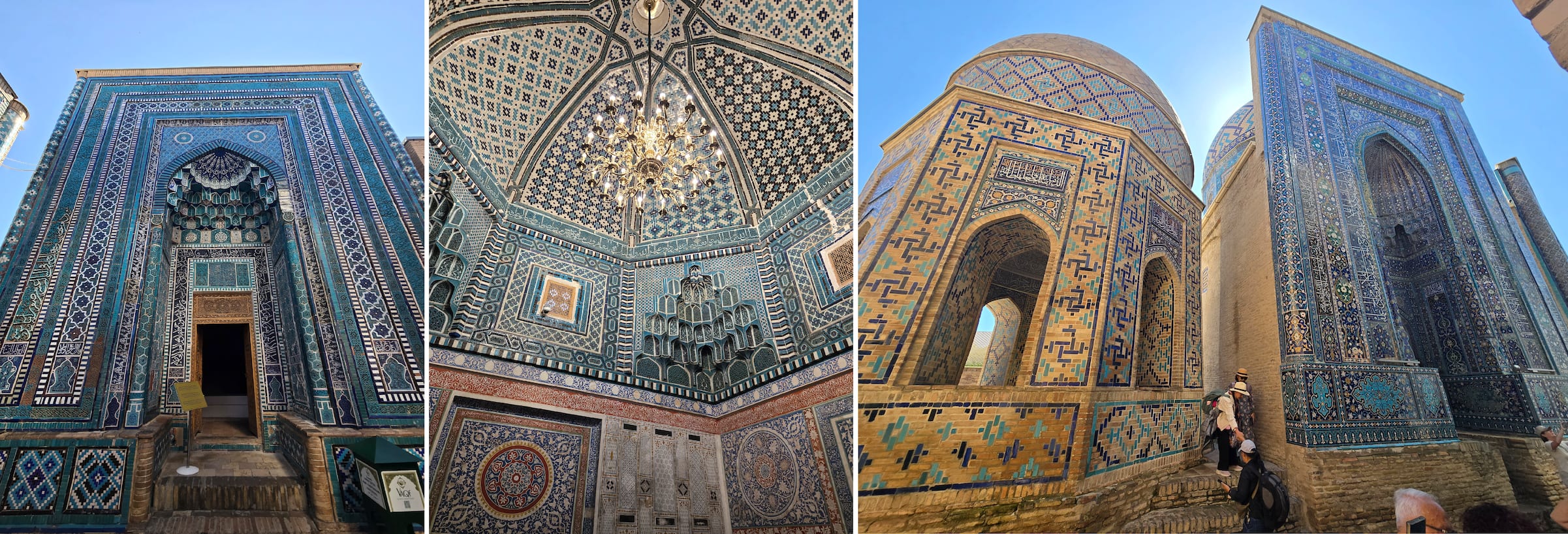
One of my favorite stops was a Shah-i-Zinda, a necropolis/mausoleum commissioned by Amir Temur's family. Even the incessant request for pictures couldn’t stop me from marveling at the different intricate designs that adorned the facades, walls, ceilings, and doors of the tombs. If you ignore that they’re full of dead people, they would make for beautiful spaces for the living—like a wedding venue or library. Or a temple of sorts.
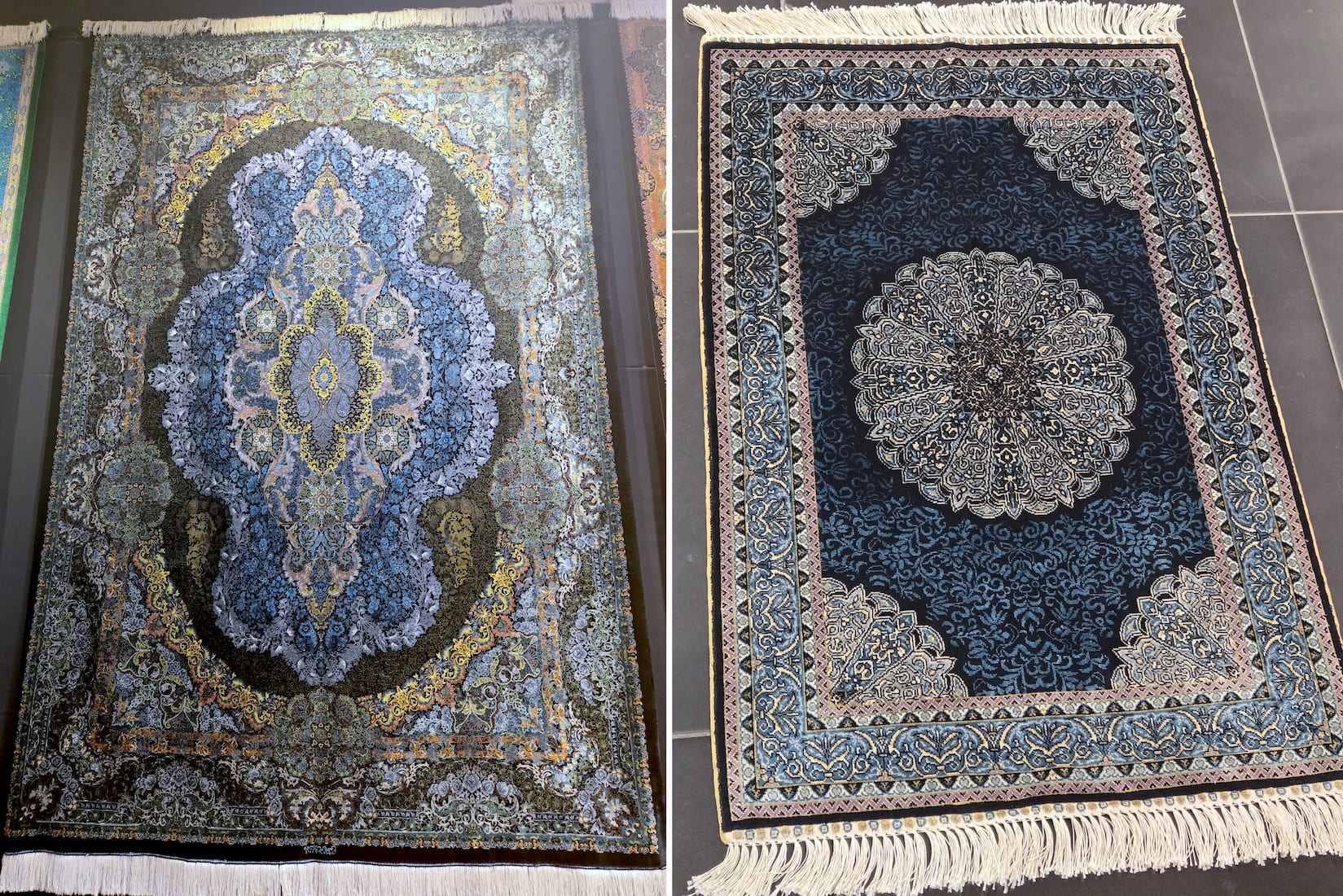
Bukhara brought me one of my most expensive purchases to date: a handmade silk rug. Bukhara is known for its rugs, and it’s not hard to see why. I had visited a rug artisan once before and I definitely didn’t remember being so drawn into the products. I think the colors and designs were more up my alley this time around, as were the prices. Unfortunately my favorite rug was two meters long and $36K, but I did pick up a beautiful 80x120cm piece that’s now adorning my floor. Fun fact: a rug will last 200 years on the floor but only 100 while hanging due to the weight (and therefore gravity) loosening the knots. Foot traffic also helps further compress the knots. Even so, I cannot bear the thought of standing on a $1200 rug.
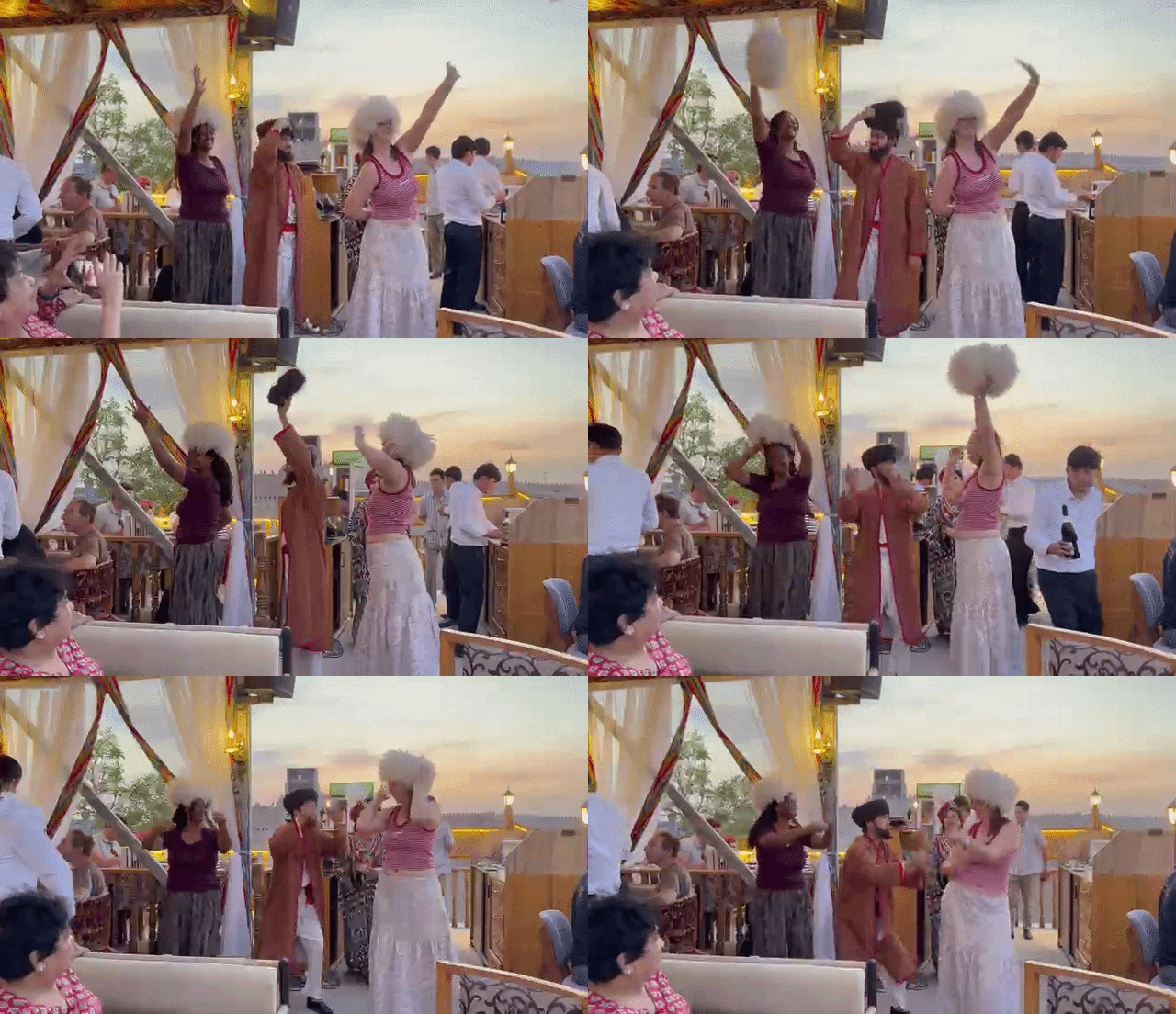
While I was sad to not spend my birthday in Uzbekistan, the guide made sure I had a celebration on the last night in which I was voluntold to dance and be merry.
more Uzbek thoughts
I feel very fortunate that our guide balanced her pride for Uzbekistan with realism. Her support for the (arguably authoritarian) leadership was supported by policy, action, and results. Their first post-USSR president focused on rebuilding the Uzbek identity alongside a democratic state (which he was re-elected to lead during his tenure).
Personally, I very much respect that the guide had good things to say about socialism despite the terrors brought about by the USSR. “Where there’s capitalism, there’s less humanity. In socialism, there’s more humanity.” Considering the malignment of left/progressive policies in the west due to Soviets, I was impressed by her nuance. May the west discover it soon. Our guide really seemed to love the country for what it is and not just the image of it. That love was absolutely contagious, and I hope to return one day.